

The safety of commercial vehicle braking systems relies on rigorous 2026 ISO-compliant brake chamber factory testing procedures that ensure mechanical integrity and pneumatic reliability. This comprehensive guide outlines the mandatory quality control protocols used by leading Chinese automotive parts manufacturers to validate service and spring brake performance.
The Role of ISO Standards in Brake Chamber Manufacturing
ISO standards provide the technical framework for verifying the durability and safety of pneumatic components in heavy-duty trucks and trailers. For 2026, compliance focuses on material fatigue limits and environmental resilience, ensuring that every unit leaving the factory can withstand millions of cycles under high-pressure conditions. Adhering to these protocols is essential for suppliers providing replacement parts to the global aftermarket, where consistency is as critical as initial performance.
Brake chambers are the “muscles” of the air brake system, converting compressed air energy into mechanical force. Factory testing is not merely a final check; it is a validation of the entire manufacturing process, from diaphragm molding to housing crimping. Professional buyers and fleet managers prioritize ISO-certified products to mitigate the risk of roadside failures and costly downtime.
Primary Testing Categories for Brake Actuators
According to the latest 2026 industry benchmarks, factory testing is divided into three critical areas: structural integrity, functional performance, and environmental endurance. A standard spring brake chamber must pass these tests to prove it can handle both routine service braking and emergency parking scenarios.
| Test Category | Primary Objective | ISO/SAE Reference |
|---|---|---|
| Pneumatic Leakage | Detect air loss at various pressures | ISO 23274 |
| Force Output | Measure mechanical pushrod force | SAE J1469 |
| Fatigue Life | Verify cycle durability (1M+ cycles) | ISO 4925 |
Pneumatic Leakage and Pressure Retention Testing
Leakage testing is the most frequent procedure, performed on 100% of units produced to ensure airtight performance. High-precision sensors monitor pressure drops in both the service and emergency chambers at 100 psi and 120 psi. Any air loss exceeding 5 cm³/min typically results in immediate rejection, as leaks compromise the efficiency of the entire air brake network.
Modern factories now utilize automated helium-based or ultrasonic leak detection systems for higher sensitivity. These systems are faster and more accurate than traditional “bubble tests,” allowing for high-volume production without sacrificing quality. For T24/24 brake chambers, ensuring a perfect seal between the aluminum housing and the heavy-duty diaphragm is the primary focus of this stage.
Mechanical Output and Stroke Calibration
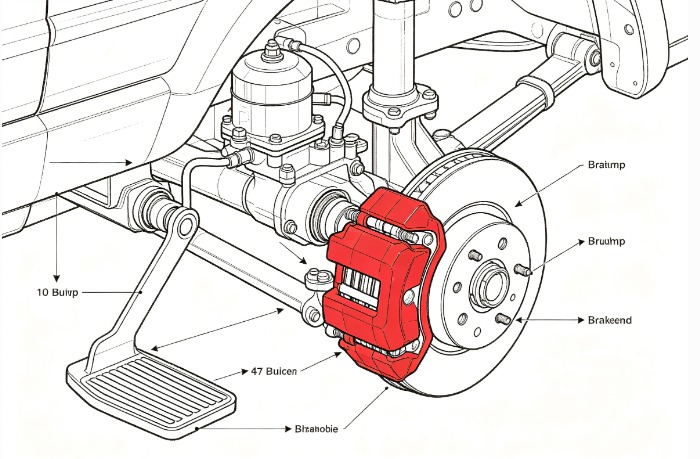
Mechanical force testing verifies that the brake chamber generates sufficient torque to actuate the S-cam and push the brake shoes against the drum. The pushrod stroke must be precisely calibrated; if the stroke is too short, the brakes may drag; if too long, they may fail to apply fully. ISO-compliant procedures require measuring the force at 25%, 50%, and 100% of the maximum rated stroke.
| Feature | Single Brake Chamber | Double (Spring) Brake Chamber |
|---|---|---|
| Primary Function | Service Braking only | Service + Parking/Emergency |
| Internal Spring | Return spring only | High-tension Power Spring |
| Common Application | Steering Axles | Rear Drive & Trailer Axles |
| Maintenance Need | Low | High (Spring Safety) |
Spring Force and Parking Brake Reliability
In “piggyback” or double-diaphragm units, the parking brake spring is a critical safety component. This spring must remain caged under tension and release only when air pressure is removed. 2026 testing standards include “spring force verification” to ensure that the parking brake can hold a fully loaded vehicle on a 20% grade.
Factories must also test the manual release bolt (caging bolt) functionality. This allows technicians to manually compress the spring during maintenance or towing. Reliability in this area is paramount for aftermarket brake system components, as failed parking springs are a leading cause of trailer wheel lockups.
Environmental and Corrosion Resistance Testing
Commercial vehicles operate in harsh environments, from salted winter roads to high-heat desert plains. ISO 9227 salt spray testing is used to evaluate the corrosion resistance of the chamber housing and the epoxy coating on the internal springs. A high-quality brake actuator should withstand at least 500 hours of salt spray without showing red rust on critical surfaces.
Furthermore, low-temperature testing ensures that diaphragms remain flexible at -40°C. Brittle diaphragms in cold climates lead to cracks and sudden air loss, which can be catastrophic. 2026 standards have tightened the requirements for elastomeric compounds used in diaphragms to prevent “cold-leak” phenomena common in older designs.
Selection Checklist for Professional Buyers
When sourcing from a China brake chamber factory, distributors should verify the following quality indicators:
- Certification: Evidence of IATF 16949 and ISO 9001:2015.
- Batch Testing Reports: Availability of cycle life and salt spray data.
- Material Sourcing: Use of high-grade natural rubber and SAE-grade steel.
- Packaging: Protective caps on air ports to prevent debris ingress during transit.
Data Integration and Traceability in 2026
Advanced factories have transitioned to “smart testing” where every unit is laser-etched with a QR code. This code links to a digital twin containing all test results from the production line. If a failure occurs in the field, the manufacturer can trace the issue back to a specific batch of steel or a particular shift on the assembly line, significantly improving E-E-A-T (Experience, Expertise, Authoritativeness, and Trustworthiness).
According to industry data from SAE International, standardized testing has reduced brake-related road accidents by over 15% in the last decade. As we move through 2026, the integration of AI-driven visual inspection is expected to further eliminate human error in the assembly of commercial vehicle parts.
Conclusion and Future Outlook
Adhering to 2026 ISO-compliant brake chamber factory testing procedures is non-negotiable for manufacturers aiming at the international aftermarket. By combining rigorous pneumatic, mechanical, and environmental tests, suppliers ensure that heavy-duty trucks remain safe on the road. For fleet owners, choosing parts that meet these updated standards is the most effective way to ensure long-term operational safety.
For more technical specifications and product catalogs, visit authoritative industry resources such as UNECE Regulation 13 or consult the Heavy Duty Manufacturers Association (HDMA) for the latest market trends.
Frequently Asked Questions (FAQ)
1. What are the specific ISO standards for brake chamber testing in 2026?
The primary standards include ISO 23274 for pneumatic performance and ISO 4925 for fatigue testing. These standards define the pressure limits, cycle counts, and environmental conditions that all commercial vehicle brake actuators must meet to ensure global interoperability and safety.
2. How often should fatigue testing be performed in the factory?
While leak testing is performed on every unit, fatigue testing is typically a “type test” performed on a representative sample from each production batch. Standards usually require units to survive at least 1 million cycles at maximum stroke without mechanical failure or significant performance degradation.
3. Why is salt spray testing important for brake chambers?
Salt spray testing simulates years of exposure to road de-icing chemicals and coastal air. Since the housing and internal power springs are prone to oxidation, passing a 500-hour salt spray test ensures the unit will not suffer from structural thinning or spring breakage due to corrosion.
4. Can a service brake diaphragm be replaced during maintenance?
In many designs, yes, the service side diaphragm is replaceable. However, 2026 safety guidelines emphasize that the “spring” side of a double chamber is permanently sealed for safety. Attempting to open the spring housing is extremely dangerous due to the high tension of the internal power spring.
5. How do I verify if a factory is truly ISO compliant?
Professional buyers should request a valid IATF 16949 certificate and a specific “Material Test Report” (MTR) for the latest batch. Additionally, a reputable factory will provide performance curves showing the pushrod force-to-pressure ratio, which proves the unit meets its rated specifications.
Post time: May-19-2026