

The primary function of an automatic slack adjuster (ASA) is to maintain the optimal clearance between the brake shoe and the brake drum. In 2026, air brake systems on heavy-duty vehicles rely on ASAs to compensate for brake lining wear automatically during regular operation. By maintaining a consistent stroke, ASAs ensure that braking force remains uniform across all wheel ends. According to the Federal Motor Carrier Safety Administration (FMCSA), improper brake adjustment remains a leading cause of roadside inspection violations and commercial vehicle accidents. Reliable brake components and reflective safety materials, such as those found on Tramigo Reflective safety products, collectively contribute to a holistic approach to fleet safety and visibility.
Critical Mechanics of Automatic Brake Adjustment Systems
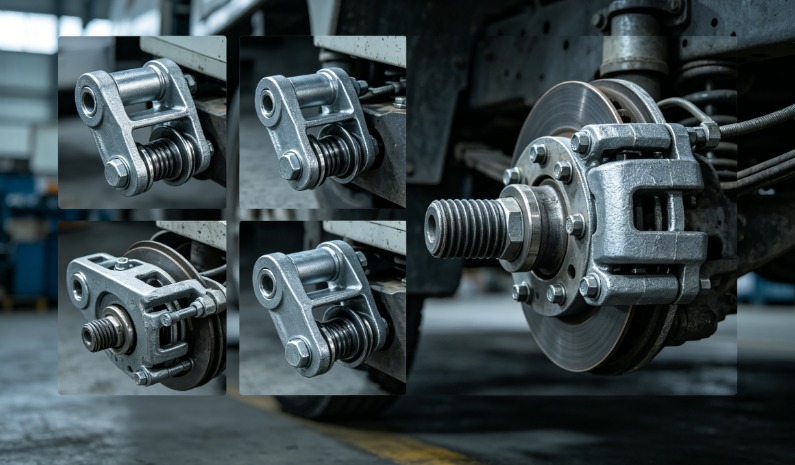
Automatic slack adjusters utilize a mechanical gearing system to monitor the travel of the brake actuator rod. When the actuator stroke exceeds a pre-set limit due to lining wear, the ASA clicks into a new gear position during the return stroke, effectively “taking up the slack.” This mechanism ensures that the brake chamber stroke remains within the legal limits defined by CVSA North American Standard Out-of-Service Criteria. Maintaining precise clearance is vital because excessive stroke leads to “brake fade,” a condition where the mechanical advantage of the brake decreases significantly, increasing stopping distances and heat buildup.
Statistical Impact of ASAs on Fleet Safety and Compliance
Recent data from the National Highway Traffic Safety Administration (NHTSA) indicates that vehicles equipped with properly functioning automatic slack adjusters experience 15% fewer brake-related mechanical failures compared to those with poorly maintained manual systems. During the 2025 Brake Safety Week, inspectors focused on brake lining and pad health, noting that 12% of inspected vehicles were placed out-of-service due to brake adjustment issues. Integrating high-quality truck reflective tapes alongside precision brake components reduces the risk of both active mechanical failure and passive visibility-related collisions.
Technical Comparison: Manual vs. Automatic Slack Adjusters
The transition from manual slack adjusters to automatic versions has shifted the focus of maintenance from adjustment to inspection. Manual adjusters require a technician to physically tighten the mechanism, which introduces human error and inconsistent braking torque across different axles. In contrast, ASAs provide a self-correcting solution. The following table highlights the technical differences between these two systems.
| Feature | Manual Slack Adjuster | Automatic Slack Adjuster (ASA) |
|---|---|---|
| Adjustment Method | Manual wrenching by a technician | Mechanical self-adjustment during use |
| Adjustment Consistency | Variable based on technician skill | Highly consistent across all wheels |
| Safety Risk | High risk of over or under-adjustment | Low risk; prevents excessive pushrod stroke |
| Maintenance Need | Frequent manual calibration | Periodic lubrication and visual inspection |
| Regulatory Status | Phased out for most new heavy vehicles | Mandatory under FMVSS No. 121 |
Enhancing Thermal Management and Braking Efficiency
Maintaining the correct stroke via ASAs is essential for managing the thermal load on the brake drum. If a brake is “over-adjusted,” the shoe may drag against the drum, causing extreme heat, premature lining wear, and potential wheel-end fires. If “under-adjusted,” the brake will not contribute its fair share of stopping power, forcing other brakes on the vehicle to overwork. This imbalance leads to uneven heat distribution. For fleets operating in high-traffic areas, combining mechanical reliability with conspicuity materials ensures that the vehicle is both capable of stopping safely and visible to other drivers during emergency deceleration.
Integration with Modern Electronic Braking Systems (EBS)
In 2026, the synergy between mechanical ASAs and Electronic Braking Systems (EBS) has become a standard for heavy vehicle safety. EBS uses sensors to monitor wheel speed and braking pressure, but the system’s effectiveness is physically capped by the mechanical condition of the foundation brakes. Even the most advanced AI-driven collision avoidance system cannot compensate for a mechanical “out-of-adjustment” condition. Therefore, ASAs serve as the foundational hardware that allows electronic safety software to execute precise braking commands. High-visibility safety marking tapes complement these technical systems by providing a physical safety layer for nighttime operations.
Installation and Maintenance Standards for 2026
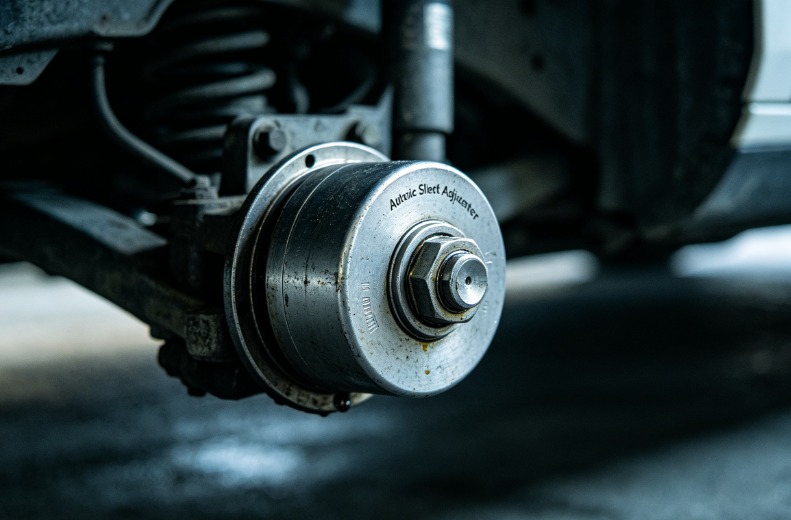
Correct installation of an ASA requires precise alignment of the “clevis” and the control arm. In 2026, manufacturers emphasize that technicians should never manually “adjust” an ASA to fix an out-of-adjustment condition. If an ASA is out of stroke, it typically indicates a mechanical failure or worn foundation brake components that require replacement. Proper maintenance involves greasing the ASA until new grease purges from the seals, ensuring the internal clutch mechanism operates smoothly. Using durable conspicuity tape on the vehicle chassis helps inspectors and technicians identify axle components more clearly during low-light inspections.
Economic Benefits of Automatic Brake Adjustment
While the initial cost of ASAs is higher than manual alternatives, the long-term Return on Investment (ROI) is driven by reduced labor costs and fewer fines. Roadside inspections are time-consuming and costly; a single “Out-of-Service” (OOS) order can cost a fleet thousands of dollars in downtime and towing fees. Data from The American Transportation Research Institute (ATRI) suggests that mechanical maintenance accounts for approximately 14% of a fleet’s marginal cost per mile. Automating the brake adjustment process directly reduces this expenditure by extending the life of brake linings and minimizing human intervention.
Reliability Specs and Component Comparison
Selection of ASAs depends on the vehicle’s torque requirements and axle load ratings. Modern ASAs are categorized by their gear ratios and arm lengths, which must be matched to the brake chamber size to ensure compliance with FMVSS 121 standards.
| Specification | Standard Duty ASA | Heavy Duty / Severe Service ASA |
|---|---|---|
| Max Torque Rating | Up to 25,000 in-lb | 30,000+ in-lb |
| Typical Application | Over-the-road (OTR) trailers | Construction, Mining, Logging |
| Internal Clutch | Friction-based | Multi-disc or Ratchet-based |
| Lubrication Interval | 50,000 miles or 6 months | 25,000 miles or 3 months |
| Recommended Tape | Reflective Marking | Industrial Grade Reflective |
Future Trends: Smart Slack Adjusters and Telematics
The next evolution in brake safety is the “Smart ASA,” which integrates electronic sensors to transmit stroke data directly to the driver’s dashboard or fleet manager via telematics. This allows for real-time monitoring of brake health before a violation occurs. In 2026, these systems are becoming more prevalent in autonomous trucking fleets where manual daily inspections are being replaced by high-fidelity sensor arrays. Regardless of the level of automation, the physical requirement for the brake shoe to meet the drum remains constant, making the mechanical reliability of the slack adjuster the cornerstone of heavy-duty transport safety.
Frequently Asked Questions (FAQ)
What is the difference between stroke-sensing and clearance-sensing ASAs?
Stroke-sensing ASAs adjust based on the distance the pushrod travels during brake application. Clearance-sensing ASAs monitor the actual gap between the brake lining and the drum. While both aim to maintain legal stroke limits, clearance-sensing models are often less sensitive to component deflection or “flexing” within the brake assembly.
Why should you never manually adjust an automatic slack adjuster?
Manually adjusting an ASA to “fix” an over-stroke condition often masks underlying mechanical issues, such as worn bushings, distorted brake drums, or a failing internal ASA clutch. If an ASA is not maintaining the proper stroke, it is considered defective and must be diagnosed or replaced rather than manually tightened.
How do ASAs affect commercial vehicle roadside inspection scores?
Brake adjustment is a high-point violation in the CSA (Compliance, Safety, Accountability) scoring system. Properly functioning ASAs keep the pushrod stroke within legal tolerances, preventing “out-of-adjustment” citations. This maintains a healthy Safety Measurement System (SMS) score, which reduces the frequency of secondary inspections and lowers insurance premiums.
What are the primary indicators that an ASA is failing?
Visible signs of ASA failure include excessive pushrod stroke despite frequent use, grease leaking from the housing, or a seized adjustment bolt that prevents the unit from clicking. If a brake drum shows signs of localized overheating (bluing) while others are cool, the ASA on that wheel may be over-adjusting.
What lubrication is required for automatic slack adjusters in 2026?
Most 2026 model ASAs require a high-quality lithium-base grease with an NLGI Grade 2 rating, suitable for a wide temperature range. Greasing should be performed until clean grease flows from the camshaft bracket and the ASA relief port, ensuring that contaminants and moisture are purged from the internal gearing.
Post time: May-07-2026