

Evaluating the cost-effectiveness of brake caliper repair kits is a critical process for fleet managers and maintenance professionals aiming to optimize vehicle uptime while minimizing operational expenses. This technical guide examines the financial and functional variables that determine whether a repair kit offers genuine value compared to full caliper replacement. By analyzing material quality, labor requirements, and long-term durability, stakeholders can make informed procurement decisions within the commercial vehicle aftermarket.
Defining Cost-Effectiveness in Brake System Maintenance
Cost-effectiveness in the context of commercial vehicle braking is the balance between the initial procurement price of a brake caliper repair kit and its ability to restore the component to OEM-standard performance levels. It is not merely the lowest price point but the lowest total cost of ownership (TCO) over the component’s extended service life. A high-quality kit must mitigate the risk of premature failure, which could lead to secondary damage to the brake pad or rotors.
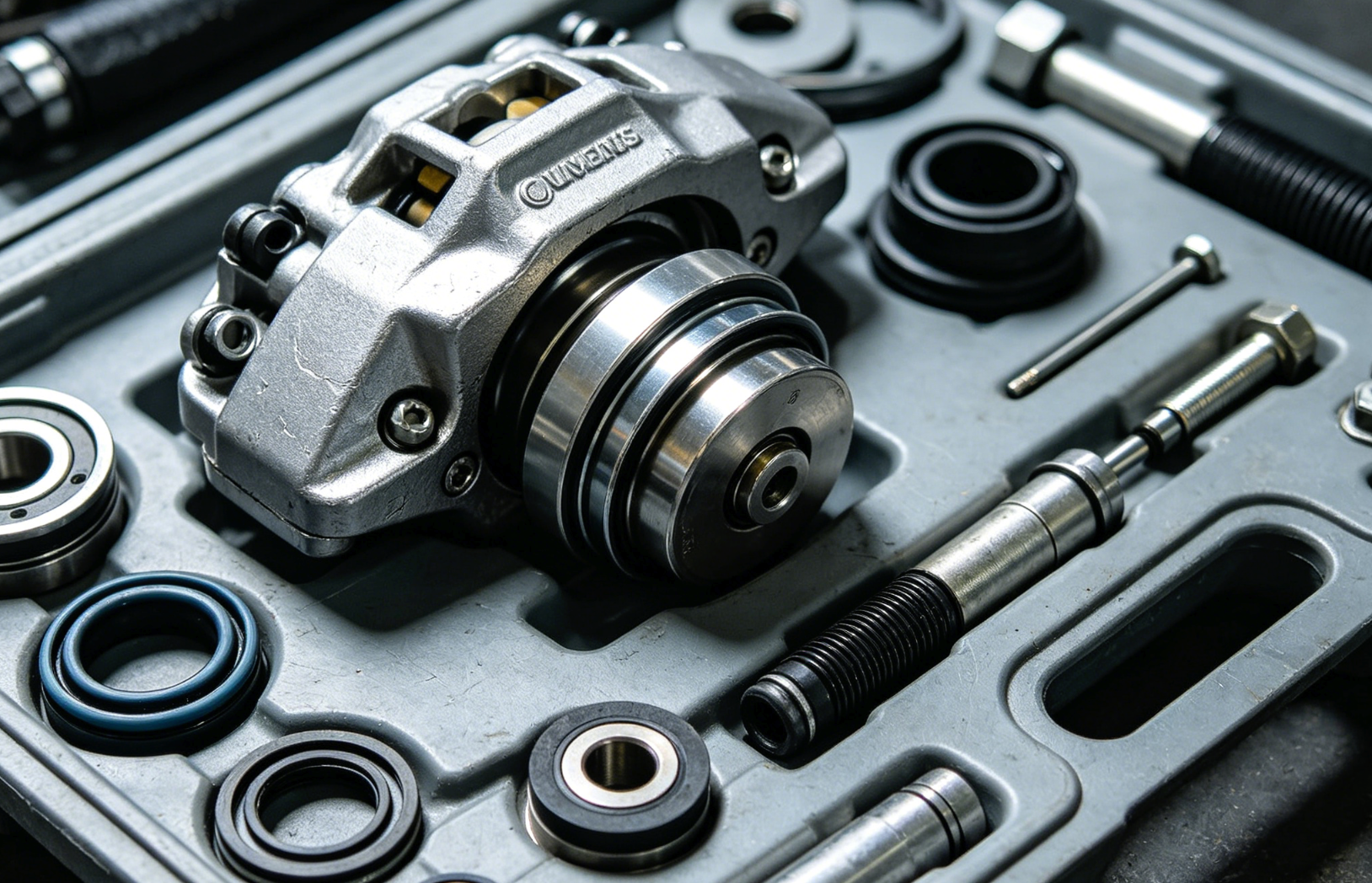
The primary objective of utilizing a repair kit is to extend the life of the brake caliper shell, which is a high-value cast component. When the internal seals, boots, or pistons fail, a kit provides a surgical solution that avoids the waste of discarding a functional metal housing. This approach is standard in heavy-duty sectors, including trucks and trailers, where maintenance budgets are under constant pressure to remain lean without compromising safety.
Key Factors Influencing Repair Kit Value
The value of a repair kit is fundamentally tied to its material composition and the precision of its components. According to industry observations, kits utilizing EPDM (Ethylene Propylene Diene Monomer) for rubber seals offer superior resistance to heat and brake fluid degradation compared to lower-grade alternatives. High-quality pistons within these kits must also feature precise tolerances to ensure smooth actuation within the truck brake caliper shell.
Labor costs represent a significant portion of the cost-effectiveness equation. If a repair kit is poorly designed or lacks essential hardware, the time spent by technicians on the assembly line increases, potentially neutralizing the savings gained from not buying a new caliper. Therefore, “all-in-one” kits that include high-temp grease and replacement clips often provide better fiscal value than cheaper, incomplete sets.
Table 1: Material and Component Comparison for Repair Kits
| Feature | Premium Repair Kit | Budget Repair Kit | Impact on Cost-Effectiveness |
|---|---|---|---|
| Rubber Material | High-grade EPDM | Standard Nitrile | Long-term leak prevention vs. frequent replacement |
| Piston Coating | Hard Chrome or Ceramic | Polished Steel | Corrosion resistance vs. risk of seizing |
| Component Scope | Full hardware included | Seals and boots only | Reduced labor time vs. extra sourcing costs |
| Compatibility | OEM Precision Match | Generic “One size fits most” | Guaranteed fit vs. high return/failure rate |
Labor Analysis: Repair vs. Replacement
A critical decision point for fleet operators is the labor-to-part ratio. Repairing a caliper typically takes 45 to 90 minutes of dedicated bench time, whereas a direct replacement can be completed in under 30 minutes. The cost-effectiveness of the brake caliper repair kit is highest when the hourly labor rate is lower than the price delta between the kit and a new unit, which is often the case for complex commercial air disc brakes.
For specialized components like the brake master cylinder or high-pressure valves, the precision required for a rebuild is even higher. If the internal bore of the caliper is pitted or scored, no repair kit—regardless of quality—will be cost-effective, as the seal will fail immediately. Proper inspection protocols are therefore essential to ensure that “repairing” does not become “delaying the inevitable.”
Quality Standards and Global Sourcing
In the B2B aftermarket, sourcing from a manufacturer that adheres to ISO9001 and IATF 16949 standards is non-negotiable for ensuring cost-effectiveness. Certified “China auto parts manufacturers” provide a strategic advantage by offering OEM-equivalent performance at a fraction of the cost of branded European or American parts. These manufacturers often supply the very components found in a solenoid valve or a slack adjuster to global markets.
According to 2025 industry reports from the Motor & Equipment Manufacturers Association (MEMA), the shift toward high-quality aftermarket kits has increased by 12% as fleets look to offset the rising costs of new vehicle procurement. By verifying the testing certifications of a supplier, such as salt spray testing for pistons and tension testing for seals, buyers can quantify the expected “life-per-dollar” of the kit.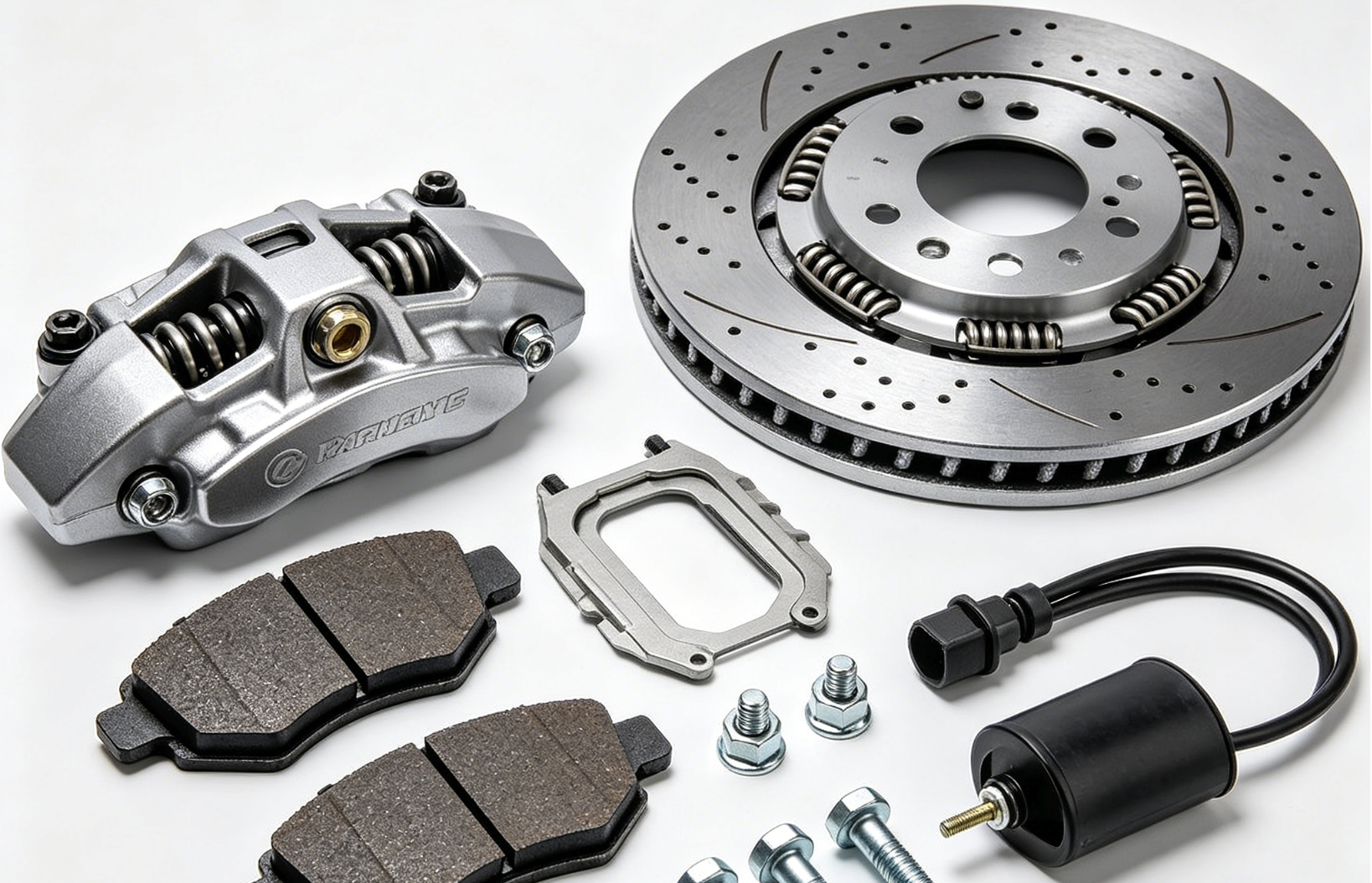
Long-term Durability and Risk Mitigation
The ultimate metric for cost-effectiveness is the mean time between failures (MTBF). A kit that lasts 200,000 miles is significantly more valuable than one that fails at 50,000 miles, even if the latter costs 50% less. Failure in the braking system can lead to “dragging brakes,” which increases fuel consumption and accelerates the wear of the brake pad, leading to exponential costs.
Furthermore, integrating a repair strategy with other system checks, such as inspecting the brake chamber, ensures holistic vehicle health. A holistic maintenance approach prevents a situation where a newly repaired caliper is compromised by a faulty air supply or a seized adjuster.
Table 2: Risk-Benefit Matrix for Caliper Maintenance
| Strategy | Initial Cost | Risk Level | Optimal Use Case |
|---|---|---|---|
| OEM New Caliper | Very High | Very Low | New vehicles under warranty |
| Premium Repair Kit | Moderate | Low | Mainstream fleet maintenance (2-5 years old) |
| Budget Repair Kit | Low | High | Temporary fixes or low-mileage trailers |
| Remanufactured Unit | High-Moderate | Moderate | When internal bore damage is present |
Procurement Checklist for B2B Buyers
To maximize ROI, procurement officers should follow a structured evaluation checklist. This ensures that the technical specifications of the brake caliper repair kit align with the specific demands of heavy-duty transport.
- Verify Rubber Composition: Ensure seals are rated for temperatures up to 150°C.
- Check Kit Completeness: Does it include the guide pins, dust caps, and specialized lubricants?
- Manufacturer Credibility: Does the supplier have a proven track record in the “truck parts” sector?
- Warranty Terms: A minimum 12-month warranty is the industry standard for professional-grade kits.
- Technical Support: Access to installation guides and torque specifications.
Table 3: Technical Selection Criteria
| Parameter | Specification Requirement | Rationale |
|---|---|---|
| Piston Material | Stainless Steel or Treated Alloy | Prevents rust-jacking and seal tearing |
| Seal Type | Square-cut design | Ensures proper piston retraction and reduced drag |
| Lubricant | Silicone-based high-temp grease | Prevents rubber swelling and pin seizing |
| Packaging | Sealed anti-corrosion bags | Maintains component integrity during shipping/storage |
Summary of Economic Impact
The adoption of high-quality repair kits represents a significant shift toward sustainable and economical fleet management. By focusing on precision-engineered components, operators can reduce their environmental footprint and maintain a competitive edge through lower maintenance overheads. For those managing heavy trucks, trailers, or buses, the “repair over replace” philosophy, supported by rigorous vendor vetting, remains the most viable path to long-term profitability.
FAQ: Evaluating Brake Caliper Repair Kits
1. How do I know if a repair kit is more cost-effective than a new caliper?
Cost-effectiveness is achieved when the cost of the kit plus labor is less than 60% of a new caliper’s price, provided the caliper housing is intact. If the internal bore is damaged, any investment in a kit is wasted, making replacement the only viable option.
2. What is the most common cause of repair kit failure in commercial vehicles?
Incorrect installation and the use of improper lubricants are the leading causes. Using petroleum-based grease on EPDM rubber seals causes them to swell and fail rapidly. Always use the silicone-based lubricant provided in professional brake caliper repair kits.
3. Are there specific standards I should look for when sourcing from China?
Yes, ensure the manufacturer is ISO/TS 16949 or IATF 16949 certified. These standards specifically govern the quality management systems for the automotive industry, ensuring that the parts meet strict global performance and safety requirements for heavy-duty applications.
4. Does the type of brake fluid used affect the cost-effectiveness of the kit?
Absolutely. Repair kit seals are designed to work with specific fluids (usually DOT 3, 4, or 5.1). Using the wrong fluid can chemically degrade the seals in weeks, leading to expensive rework and downtime that destroys the initial savings of the repair.
5. Can a repair kit improve the fuel efficiency of my truck fleet?
Indirectly, yes. A high-quality kit ensures that the caliper piston retracts fully after braking. This prevents “brake drag,” a condition that increases rolling resistance. Reducing drag can improve fuel economy by up to 1-2% according to the EPA SmartWay program.
Post time: May-14-2026