

Understanding the root cause of brake caliper piston failures is essential for maintaining the safety and efficiency of commercial vehicle braking systems. This technical guide performs a deep-dive root cause analysis of brake caliper piston not retracting or leaking, providing fleet managers and maintenance professionals with actionable diagnostic insights. By identifying these mechanical and hydraulic failures early, operators can prevent catastrophic brake drag or fluid loss in heavy-duty trucks and trailers.
Primary Causes of Brake Caliper Piston Seizure
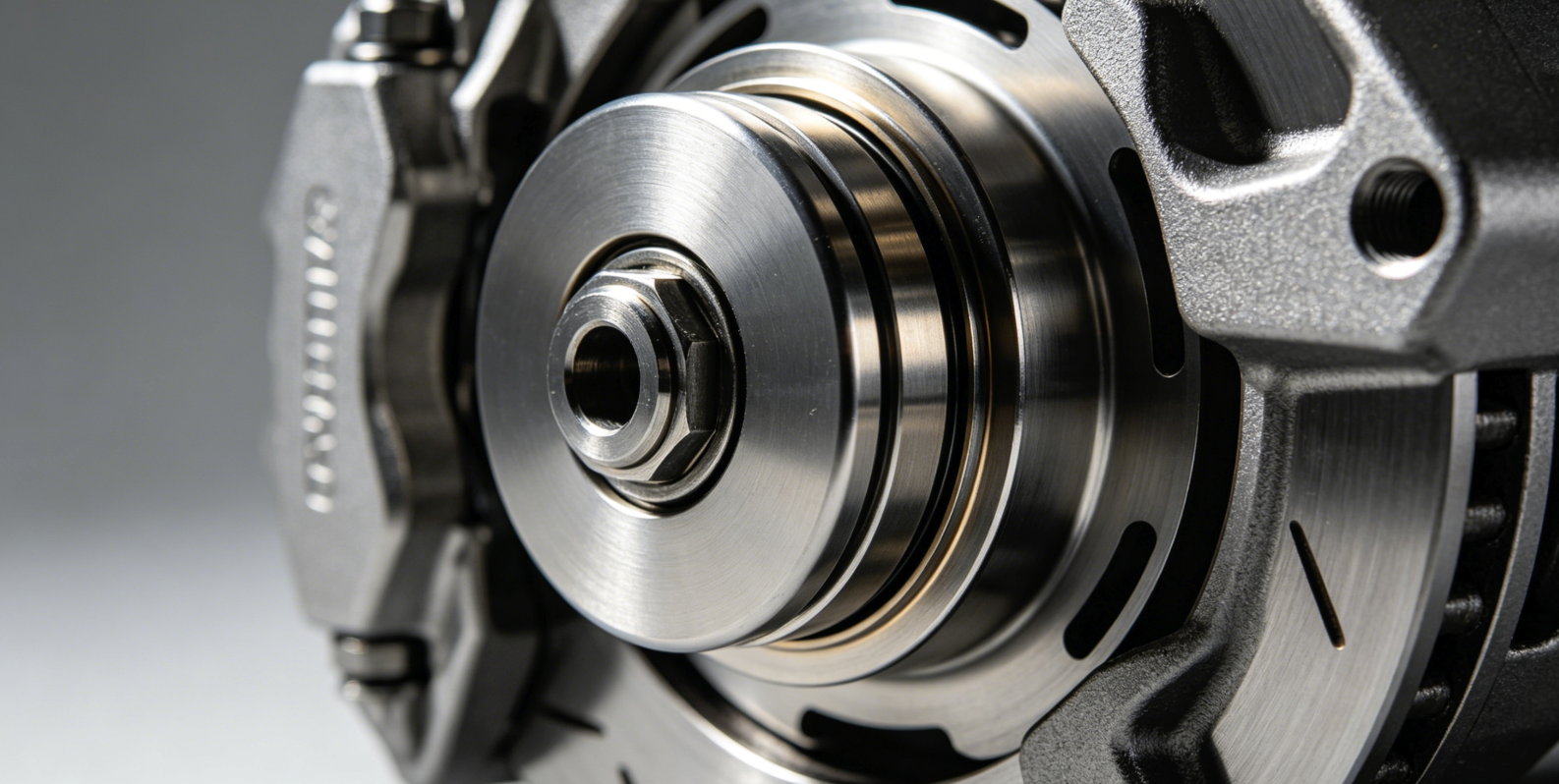
A brake caliper piston not retracting is a primary mechanical failure that leads to excessive heat generation and premature wear of the Brake Pad assembly. According to industry standards, the most frequent cause of retraction failure is the accumulation of corrosion or debris on the piston surface or within the caliper bore. When the protective dust boot is compromised, moisture enters the system, causing oxidation that physically obstructs the piston’s return path.
Hydraulic restriction within the Brake Master Cylinder or the flexible brake lines can also simulate a seized piston. If the internal lining of a brake hose collapses, it can act as a one-way valve, allowing high-pressure fluid to engage the piston but preventing the low-pressure return. This condition results in “brake drag,” which significantly reduces fuel efficiency and can damage the entire wheel end assembly.
| Symptom | Probable Mechanical Cause | Impact on Commercial Vehicles |
|---|---|---|
| Uneven Pad Wear | Guide pin seizure or piston sticking | Increased maintenance costs and downtime |
| Excessive Heat | Piston failing to retract fully | Brake fade and potential wheel fire risks |
| Vehicle Pulling | Unilateral caliper seizure | Reduced steering control during braking |
Mechanical Analysis of Piston Seal Leakage
Leakage in a Brake Caliper usually originates from a failure of the internal square-cut seal or external physical damage to the piston housing. These seals are designed to handle extreme pressure and temperature fluctuations; however, chemical degradation from contaminated brake fluid is a leading cause of seal hardening. Once the seal loses its elasticity, it can no longer maintain a tight interface with the piston, leading to visible fluid loss.
The role of the Brake Chamber in air-over-hydraulic systems is also critical, as any imbalance in the pneumatic delivery can put undue stress on the hydraulic components. High-mileage commercial vehicles often experience “bore pitting,” where the internal walls of the caliper become uneven due to long-term wear. This surface irregularity prevents the seal from seated correctly, making leakage inevitable regardless of seal quality.
Role of Slack Adjusters in Retraction Issues
While the piston itself is the moving part, the Automatic Slack Adjuster plays a vital role in maintaining the correct clearance between the friction material and the drum or disc. If the slack adjuster is over-adjusting, it creates a “tight” brake condition that prevents the piston from returning to its neutral position. This mechanical over-extension is often misdiagnosed as a hydraulic piston failure.
Proper lubrication of the slack adjuster and the S-cam (in drum systems) is required to ensure that the mechanical return springs can overcome the friction of the moving parts. According to the Commercial Vehicle Safety Alliance (CVSA), brake-related violations remain the top reason for vehicles being placed out-of-service during roadside inspections. Maintaining the synchronization between the Solenoid Valve and the mechanical adjusters is essential for system-wide health.
Environmental and Operational Factors
Environmental exposure to road salts and extreme temperatures accelerates the degradation of rubber components in the braking system. In B2B aftermarket applications, the quality of the Truck Brake Caliper shell and its coating determines the component’s resistance to “caliper binding.” Heavy-duty cycles involving frequent stop-and-go maneuvers generate thermal loads that can exceed 500°C, potentially cooking the piston seals and causing them to fail.
| Factor | Effect on Piston Retraction | Mitigation Strategy |
|---|---|---|
| Road Salt | External corrosion of the piston | Use of high-quality dust boots and plating |
| Old Fluid | Internal corrosion and seal swelling | Regular hydraulic fluid flush cycles |
| Overloading | Thermal deformation of the caliper bore | Adherence to GVWR and heat dissipation checks |
Diagnostic Workflow for Piston Failure
Technicians should begin the diagnostic process by checking for “free play” in the brake assembly when the pedal is released. If the wheel does not spin freely, the Brake Master Cylinder should be isolated to determine if the pressure is being held hydraulically. If opening the bleeder valve releases the brake, the issue lies in the hoses or valves; if not, the piston is mechanically seized within the caliper.
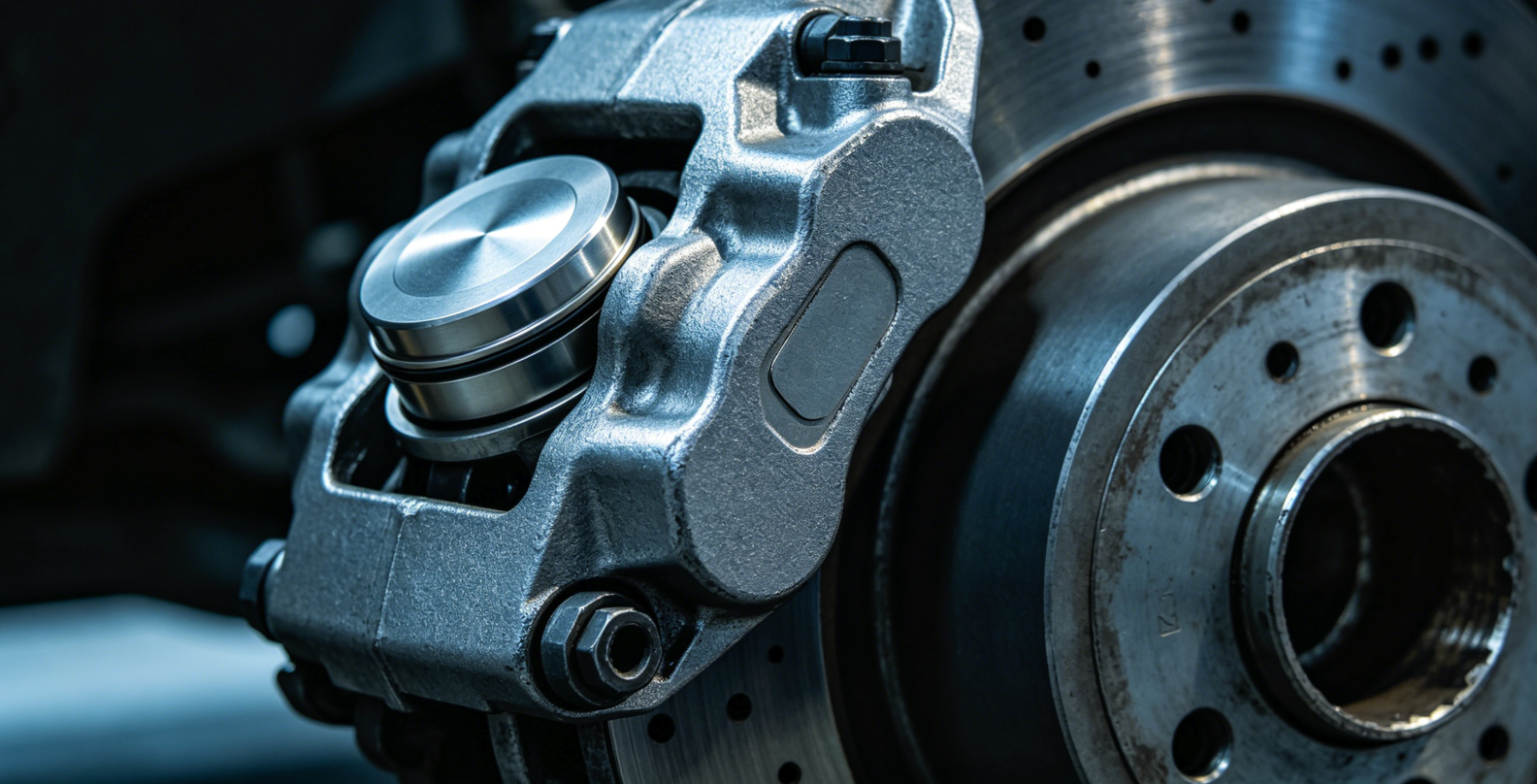
The National Highway Traffic Safety Administration (NHTSA) emphasizes that “brake performance is a critical factor in heavy truck crash prevention.” Therefore, root cause analysis must include an inspection of the Solenoid Valve and the ABS control modules to ensure no electronic faults are maintaining residual pressure. Replacing a seized caliper without addressing the underlying fluidcon tamination or air system moisture will lead to a repeat failure within a short timeframe.
Summary of Corrective Actions
| Component | Inspection Frequency | Replacement Indicator |
|---|---|---|
| Piston Seal | Every 50,000 miles | Any signs of dampness or fluid film |
| Dust Boot | Every oil change | Cracks, tears, or hardening of rubber |
| Brake Lines | Annually | Sponginess or visible outer layer cracks |
Frequently Asked Questions
Why does my brake caliper piston stick after installing new pads?
When new pads are installed, the piston is pushed back into a portion of the bore it hasn’t occupied for a long time. If that area is corroded or dirty, the piston can become stuck in the “depressed” position, preventing it from retracting properly after the first few applications.
Can a faulty solenoid valve cause the caliper piston not to retract?
Yes, in modern EBS systems, a Solenoid Valve that fails to exhaust air or pressure can maintain a residual load on the hydraulic circuit. This prevents the piston from returning, causing the brakes to remain partially applied and leading to rapid friction wear and overheating.
How do I know if the leak is from the piston or the hose?
Clean the entire area with brake cleaner and apply pressure to the brake pedal. A piston leak will typically manifest as fluid weeping from behind the rubber dust boot, whereas a hose leak will usually spray or drip from the crimped fittings or the hose body itself.
What are the dangers of driving with a leaking caliper piston?
A leaking piston introduces air into the hydraulic system, which causes a “spongy” pedal and significantly increases stopping distances. Furthermore, brake fluid on the friction surfaces reduces the coefficient of friction, potentially leading to a total loss of braking power on that wheel.
Is it better to rebuild or replace a seized brake caliper?
For commercial vehicles, replacement is often preferred to ensure the integrity of the Truck Brake Caliper shell. Rebuilding requires professional honing of the bore to remove all pits; if the bore is significantly damaged, a new unit is the only way to guarantee E-E-A-T compliant safety levels.
Post time: May-12-2026