

Maintaining optimal braking performance is essential for commercial vehicle safety, and the integration of automatic slack adjusters is a primary technical requirement for modern trailer brake systems. This article explores why automatic slack adjusters are superior to manual versions, focusing on their role in ensuring consistent brake stroke and regulatory compliance.
The Core Function of Automatic Slack Adjusters in Braking
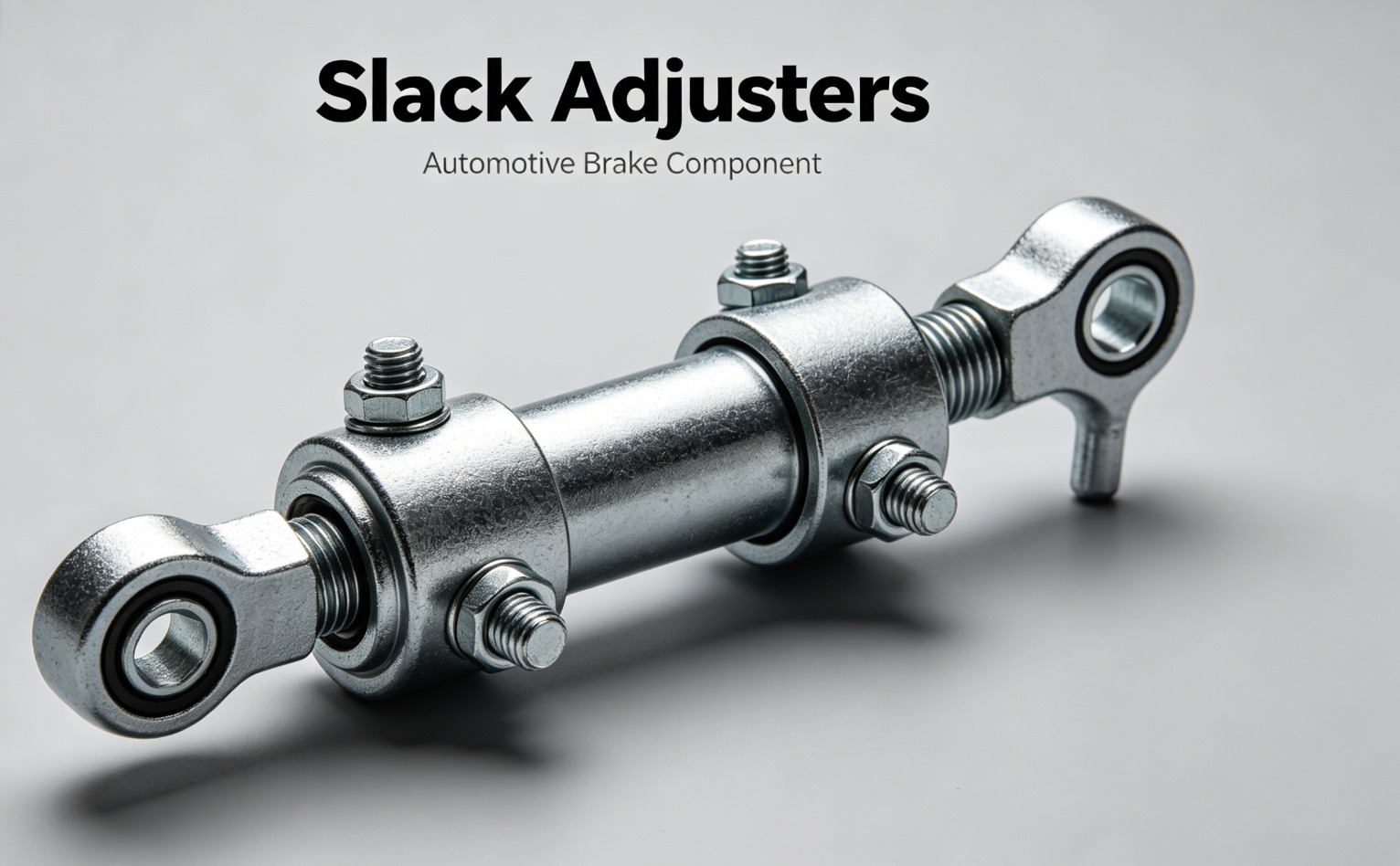
An automatic slack adjuster is a mechanical link between the brake chamber pushrod and the camshaft in S-cam air brake systems. Its primary function is to automatically compensate for the wear of brake linings by maintaining a constant clearance between the brake shoe and the drum. According to industry estimates, nearly 90% of heavy-duty trailers in developed markets now utilize automatic systems to eliminate the variability inherent in manual adjustments.
Commercial vehicle braking relies on the precise conversion of pneumatic energy into mechanical friction. When brake linings wear down, the gap between the shoe and the drum increases, requiring a longer pushrod stroke to achieve the same braking force. An automatic slack adjuster eliminates this “slack” during every brake application, ensuring that the brake chamber operates within its efficient stroke range.
Safety Advantages: Preventing Brake Fade and Imbalance
Brake fade occurs when excessive heat buildup reduces the friction between the brake drum and linings, often caused by improper adjustment or over-extended strokes. Automatic slack adjusters mitigate this risk by ensuring that all wheels on a trailer provide uniform braking force. Without these components, one wheel might engage significantly earlier or harder than others, leading to dangerous jackknife situations or increased stopping distances.
The reliability of a truck brake caliper or drum system depends heavily on consistent actuation. By maintaining the correct stroke, automatic adjusters prevent the “cam-over” condition, where the S-cam rotates so far that it becomes stuck, rendering the brake useless. This level of consistency is vital for heavy-duty trailers navigating steep descents where constant brake application is required.
Regulatory Compliance and FMVSS 121 Standards
In the United States, the Federal Motor Vehicle Safety Standard (FMVSS) 121 has mandated the use of automatic slack adjusters on all new air-braked vehicles since the mid-1990s. This regulation was implemented after data from the Commercial Vehicle Safety Alliance (CVSA) indicated that “out-of-adjustment brakes” were the leading cause of roadside inspection failures. For operators in the aftermarket, replacing a manual unit with an automatic one is not just an upgrade; it is often a step toward meeting modern safety expectations.
Maintaining compliance is easier with automatic systems because they significantly reduce the frequency of manual inspections required to pass roadside checks. While manual slack adjusters require a technician to physically tighten the mechanism, automatic versions use internal clutching systems to stay within legal limits. Failure to maintain proper stroke can lead to immediate “Out-of-Service” (OOS) orders during CVSA inspections.
Comparison: Automatic vs. Manual Slack Adjusters
The following table highlights the technical and operational differences between the two types of slack adjusters used in trailer brake systems.
| Feature | Manual Slack Adjuster | Automatic Slack Adjuster (ASA) |
|---|---|---|
| Adjustment Method | Manual labor with a wrench | Self-adjusting during brake cycles |
| Brake Stroke Consistency | Low; varies with wear and manual error | High; maintains consistent clearance |
| Maintenance Frequency | Requires frequent manual checks | Requires periodic lubrication only |
| Safety Profile | Higher risk of brake fade/imbalance | Optimized for maximum braking torque |
| Regulatory Standing | Phased out for new builds | Mandatory for most modern applications |
Economic Impact and Maintenance Efficiency
While the initial cost of an automatic slack adjuster is higher than a manual unit, the long-term Return on Investment (ROI) is substantial. Reduced labor costs are the most immediate benefit, as technicians no longer need to perform daily or weekly manual brake adjustments. Furthermore, because ASAs ensure that brake pads and linings wear evenly, the lifespan of friction materials is often extended by 15-20%.
Proper maintenance of an automatic adjuster is limited to regular lubrication. Using the correct grease ensures that the internal gears and one-way clutches function without seizing. In contrast, manual adjusters are prone to over-tightening by inexperienced staff, which can cause dragging brakes and premature failure of the brake master cylinder or other hydraulic components in hybrid systems.
Technical Selection Criteria for Trailer Operators
When selecting an automatic slack adjuster for a trailer, operators must consider the spline count, arm length, and the specific application (e.g., steer, drive, or trailer axle). The “effective length” of the adjuster arm determines the leverage applied to the camshaft, which directly impacts the braking torque. Most trailers utilize a 5-inch or 6-inch arm length with a 1.5-inch 10-spline or 28-spline configuration.
Selection Checklist for Replacement
- Spline Compatibility: Match the camshaft spline count (commonly 10, 28, or 37 splines).
- Arm Length: Measure from the center of the camshaft to the center of the clevis pin.
- Clevis Type: Choose between threaded or quick-connect clevises based on the existing solenoid valve and air line setup.
- Brand Interchangability: Ensure the ASA is compatible with industry standards like Haldex, Meritor, or Bendix designs.
Environmental and Operational Longevity
Modern automatic slack adjusters are designed to withstand harsh road environments, including exposure to road salt, moisture, and extreme temperatures. High-quality manufacturers utilize specialized seals to prevent contaminants from entering the gear housing. This durability is critical for trailers that remain in service for over a decade, often covering hundreds of thousands of kilometers between major overhauls.
According to a 2024 report by the Technology & Maintenance Council (TMC), the shift toward “intelligent” braking systems is further solidifying the role of automatic adjusters. As trailers become equipped with more sensors for Electronic Braking Systems (EBS), the mechanical foundation—provided by the slack adjuster—must be perfectly calibrated to allow electronic controllers to modulate brake pressure accurately.
Summary of Operational Benefits
The transition to automatic slack adjusters represents a shift from reactive to proactive maintenance. By automating the compensation for lining wear, these devices ensure that the trailer’s braking system is always ready for peak performance.
| Benefit Category | Key Conclusion |
|---|---|
| Performance | Maximizes braking torque by keeping the pushrod in the “power stroke” range. |
| Efficiency | Minimizes vehicle downtime by reducing the need for manual brake service. |
| Reliability | Reduces the likelihood of uneven braking and premature tire wear. |
| Compliance | Ensures the vehicle stays within legal stroke limits defined by DOT standards. |
FAQ
How often should I grease an automatic slack adjuster?
Industry standards suggest lubricating automatic slack adjusters every 40,000 to 50,000 miles or during every oil change. Use high-pressure lithium-based grease to purge old lubricant and contaminants from the internal gear housing until clean grease flows from the relief valve or seals.
Can I replace a manual slack adjuster with an automatic one?
Yes, manual slack adjusters can be replaced with automatic versions, provided the arm length and spline count match the original equipment. However, it is strongly recommended to replace adjusters in pairs across the same axle to maintain balanced braking force and prevent vehicle pulling.
Why is my automatic slack adjuster over-adjusting?
Over-adjustment is usually caused by excessive heat in the brake drum or worn-out bushings in the camshaft/foundation brake. When the drum expands due to heat, the adjuster may take up the extra space, leading to dragging brakes once the drum cools down and contracts.
Does an automatic slack adjuster ever require manual adjustment?
An automatic slack adjuster should never be manually adjusted to “fix” a brake stroke issue. If the stroke is out of limits, it indicates a mechanical failure in the adjuster or the foundation brake. Manually adjusting an ASA can damage the internal one-way clutch mechanism.
How do I know if my automatic slack adjuster is failing?
Signs of failure include a brake stroke that consistently exceeds legal limits despite the adjuster being functional, or a seized adjustment bolt that refuses to turn during service. Regular visual inspections of the pointer or stroke indicator are the best way to verify operational health.
Post time: May-11-2026