

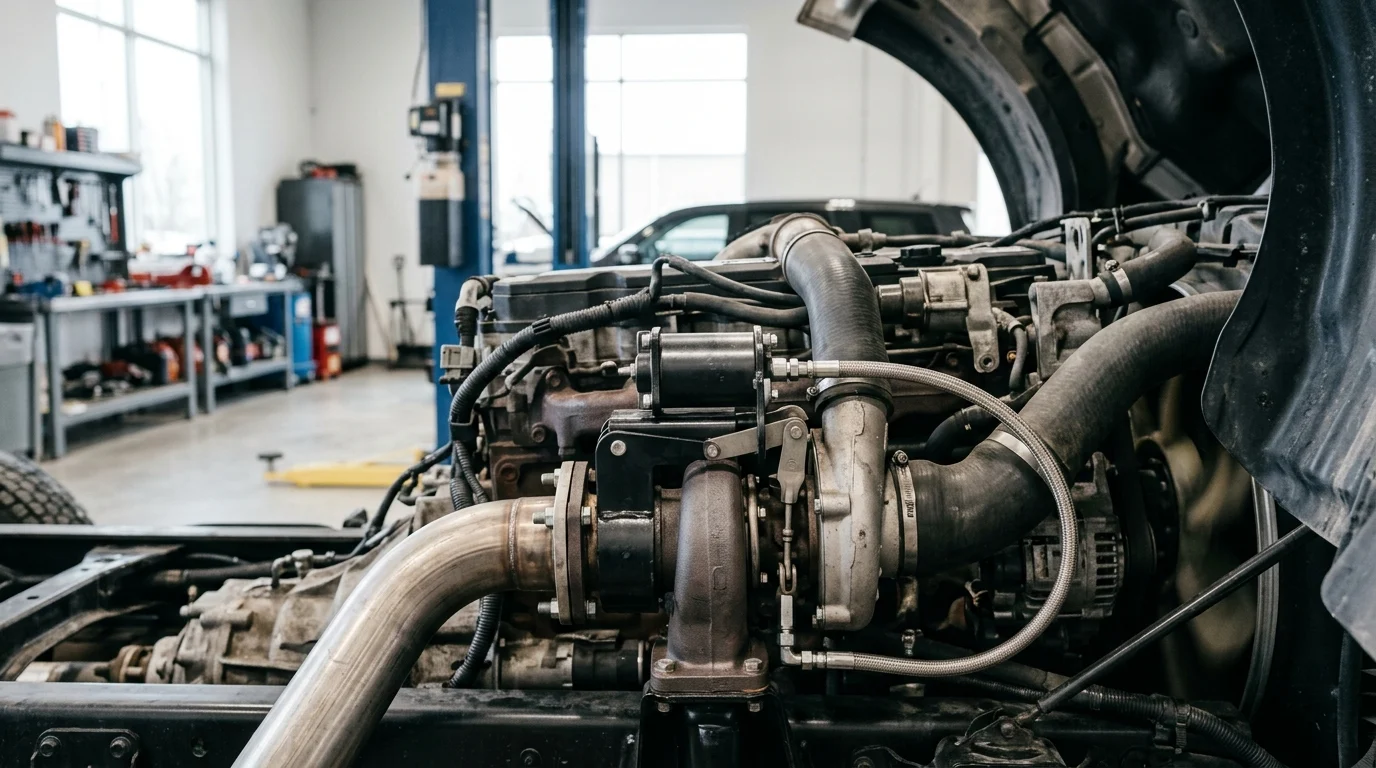
Framing Auxiliary Braking as Brake Protection
Thermal management is the cornerstone of commercial vehicle safety on steep mountain descents. Foundation brakes—whether drum or air disc systems—are designed to convert a vehicle’s kinetic energy into thermal energy through mechanical friction. However, relying strictly on foundation brakes during prolonged downgrades rapidly saturates their thermal capacity. When brake drum temperatures exceed 250°C (482°F), the friction material begins to off-gas, creating a boundary layer that severely diminishes stopping power, a phenomenon known as brake fade. In extreme cases, temperatures can spike beyond 500°C (932°F), leading to structural failure, tire fires, or complete loss of vehicle control.
Auxiliary braking systems serve as the primary countermeasure to thermal overload. By providing continuous retarding torque through the drivetrain rather than the wheel ends, these systems absorb and dissipate the massive kinetic energy generated by a heavily loaded vehicle descending a grade. Proper utilization of auxiliary braking is not merely a driving preference; it is a fundamental engineering requirement designed to preserve the foundation brakes for emergency stopping and terminal deceleration.
Commercial impact on brake life and safety
The commercial implications of effective auxiliary braking extend far beyond baseline safety compliance, directly influencing fleet maintenance budgets and vehicle uptime. A standard foundation brake reline on a Class 8 tractor-trailer typically costs between $800 and $1,200 per axle, factoring in friction material, hardware, and labor. When drivers consistently rely on foundation brakes for downhill speed control, friction material degrades prematurely, often requiring replacement at intervals as short as 50,000 to 70,000 miles.
Conversely, fleets that enforce rigorous auxiliary braking protocols routinely extend foundation brake life by 300% to 500%. In severe-duty applications, utilizing engine or hydraulic retarders shifts the wear interval to 200,000 miles or more. This reduction in maintenance frequency also eliminates the associated downtime, which can cost an operator upward of $800 to $1,000 per day in lost revenue. Consequently, the initial capital expenditure for a high-performance auxiliary braking system yields a rapid return on investment through drastically reduced lifecycle maintenance costs.
Key definitions and system boundaries
To optimize brake protection, operators must understand the technical boundaries between foundation and auxiliary systems. Foundation brakes are friction-based, pneumatically or hydraulically actuated mechanisms located at the wheel ends. They are designed for high-intensity, short-duration deceleration events. Auxiliary brakes, by contrast, are frictionless retarders integrated into the engine, exhaust, or driveline, engineered for low-intensity, continuous energy dissipation.
The boundary of an auxiliary system’s effectiveness is defined by its maximum retarding horsepower (BHP) and the vehicle’s thermal rejection capacity. While a modern engine compression brake can generate up to 600 BHP of retarding force, this energy is ultimately transferred into the engine’s cooling system or expelled through the exhaust. If the continuous kinetic energy of the descent exceeds the auxiliary system’s BHP rating, the vehicle will accelerate, necessitating the strategic, intermittent use of foundation brakes to maintain a safe equilibrium.
Auxiliary Braking Performance on Long Downgrades

The physics of a long downgrade requires a precise balance between gravitational acceleration and mechanical retardation. A standard Class 8 vehicle operating at a gross combination weight (GCW) of 80,000 lbs (36,287 kg) descending a 6% grade for five miles generates an immense volume of kinetic energy. Without auxiliary retardation, this energy would instantly overwhelm the thermal limits of the wheel-end friction materials.
Understanding how different auxiliary braking technologies perform under these severe conditions is essential for matching the right hardware to specific route profiles. Performance is not static; it fluctuates based on engine RPM, gear selection, and the physical architecture of the retarding mechanism.
Engine brakes, exhaust brakes, and hydraulic retarders
Auxiliary braking systems generally fall into three distinct mechanical categories, each offering varying levels of retarding power and operational characteristics. Exhaust brakes operate by restricting the flow of exhaust gases, creating backpressure that resists the upward movement of the pistons during the exhaust stroke. These systems are typically found in medium-duty applications and generate a modest 150 to 250 retarding horsepower.
Engine compression brakes, commonly referred to as Jake Brakes, alter the engine’s valve timing. By opening the exhaust valves near the top of the compression stroke, the system releases compressed air, turning the engine into a power-absorbing air compressor. Modern engine brakes on 13-liter to 15-liter diesel platforms can produce between 450 and 600 retarding horsepower. Hydraulic retarders, integrated into the transmission or driveline, use fluid shear to generate resistance. These are the most powerful option, capable of delivering 800+ horsepower of silent, continuous retarding force.
| Auxiliary System Type | Primary Mechanism | Max Retarding Power (Approx.) | Ideal Application |
|---|---|---|---|
| Exhaust Brake | Backpressure restriction | 150 – 250 HP | Medium-duty, flat terrain |
| Engine Compression | Valve timing alteration | 450 – 600 HP | Heavy-duty, mountainous routes |
| Hydraulic Retarder | Viscous fluid shear | 600 – 800+ HP | Severe-duty, extreme gross weights |
Effects of grade, load, weight, drivetrain, and cooling capacity
The actual performance of any auxiliary braking system is heavily modulated by external variables. The steepest grades combined with maximum payload weights demand the highest retarding torque. However, retarding power is inextricably linked to drivetrain configuration. Because engine and exhaust brakes rely on engine speed, their maximum efficiency is achieved at higher RPMs. If a driver selects a gear that is too high, engine RPM drops, and retarding horsepower can plummet by more than 50%.
Furthermore, cooling capacity acts as a strict operational ceiling. Hydraulic retarders, while immensely powerful, convert kinetic energy directly into thermal energy within the transmission fluid, which is then pumped through a heat exchanger tied to the engine’s cooling system. A hydraulic retarder can dump over 400 kW of heat into the coolant loop. If the vehicle’s radiator and fan clutch cannot reject this heat fast enough, the retarder’s electronic control module (ECM) will automatically derate the braking power to prevent engine overheating, forcing the driver to rely on the foundation brakes.
Proper Driver Use Before and During Descents
Advanced auxiliary braking hardware is rendered ineffective if the operator fails to utilize proper descent techniques. The critical phase of a mountainous descent occurs before the vehicle ever crests the hill. Proactive speed management and gear selection establish a thermal safety margin, whereas reactive braking inevitably leads to thermal runaway.
Industry best practices dictate that a vehicle must be placed into the appropriate descent configuration while still on flat ground or the slight upgrade preceding the descent. Attempting to downshift a heavy commercial vehicle while accelerating uncontrollably down a 7% grade is dangerous and often mechanically impossible.
Pre-descent checks, gear selection, and speed targets
Pre-descent checks begin with verifying the operational status of the auxiliary braking system and ensuring the engine coolant temperature is within the optimal range (typically 180°F to 195°F). The fundamental rule of descent is to select a gear that allows the auxiliary brake to hold the vehicle at a steady, safe speed without requiring continuous application of the foundation brakes.
For engine compression brakes, maximum retarding power is generally achieved between 1,900 and 2,100 RPM, depending on the engine manufacturer’s specifications. Drivers must target a descent speed that is 5 to 10 mph below the posted maximum safe speed for that specific grade. If the vehicle requires a lower speed to maintain control, the driver must downshift before the descent begins, locking the transmission into a ratio that keeps the engine RPM high and the road speed low.
Blending auxiliary braking with firm intermittent service braking
When the grade steepens or the payload is exceptionally heavy, the auxiliary brake alone may not be sufficient to hold the target speed. In these scenarios, drivers must blend auxiliary braking with the foundation brakes using a technique known as “snubbing.” Snubbing involves firm, intermittent applications of the service brakes rather than continuous, light dragging.
If the vehicle’s speed creeps 5 mph above the target speed, the driver should apply the service brakes firmly (using roughly 20 to 30 psi of brake application pressure) to reduce the vehicle’s speed to 5 mph below the target speed within approximately 3 to 5 seconds. Once the lower speed is reached, the brakes are fully released. This technique allows the auxiliary system to do the majority of the work while providing the foundation brakes with crucial time to cool convectively between applications. Dragging the brakes at a low pressure (e.g., 5 to 10 psi) generates continuous friction, preventing heat dissipation and rapidly driving wheel-end temperatures past the 350°C danger threshold.
Warning signs that require stopping
Operators must be trained to recognize the tactile and visual warning signs of thermal overload. The most immediate indicator of failing foundation brakes is a spongy pedal feel, which occurs when localized heat causes pneumatic lines to expand or hydraulic brake fluid to boil (often occurring above 400°F in hydraulic systems). Another critical warning is an uncommanded increase in vehicle speed despite the auxiliary brake being engaged at maximum capacity and the service brakes being applied.
Visual cues include smoke billowing from the wheel ends, indicating that the friction material is burning and off-gassing. If any of these warning signs occur, the driver must immediately initiate an emergency stop using runaway truck ramps if necessary, or pull into a safe turnout. Once stopped, the vehicle must remain stationary for 30 to 45 minutes to allow the foundation brakes to cool naturally. Applying parking brakes to superheated drums can cause the drums to warp or crack as they contract.
Compliance, Training, and Maintenance
Maintaining the efficacy of auxiliary braking systems requires a structured approach encompassing regulatory compliance, rigorous maintenance scheduling, and continuous driver education. Fleet managers must navigate a complex web of local ordinances and OEM guidelines to ensure systems are used legally and kept in peak operating condition.
A poorly maintained auxiliary system not only compromises safety but also skews telematics data, leading to inaccurate performance assessments. Integrating hardware maintenance with driver coaching creates a closed-loop system that maximizes brake protection.
OEM limits, road rules, and mountain-route policies
Compliance with local road rules is a significant operational consideration. Many municipalities, particularly in residential or noise-sensitive areas, enforce “No Engine Braking” ordinances. Traditional engine brakes without adequate muffling can exceed 90 decibels (dB), prompting strict noise abatement laws. Fleets must route plan accordingly or spec vehicles with advanced exhaust silencing technology to remain compliant without sacrificing safety.
Additionally, operators must adhere to OEM limits and mountain-route policies. Commercial route planning often dictates mandatory brake check areas and maximum descent speeds based on gross vehicle weight. For instance, a fleet policy might restrict 80,000-lb vehicles to a maximum of 35 mph on a specific 6% downgrade, regardless of the posted speed limit, to ensure the auxiliary braking system operates within its thermal and mechanical limits.
Inspection, calibration, cooling-system, and fluid requirements
Mechanical degradation of auxiliary systems is often subtle. Engine compression brakes rely on precise valve lash clearances to function correctly. As the engine wears, these clearances drift. OEMs typically require engine brake lash adjustments every 100,000 to 120,000 miles. Failure to perform this calibration can result in a 20% to 30% loss of retarding power, forcing the driver to over-rely on the foundation brakes.
For hydraulic retarders, fluid condition is paramount. The extreme thermal cycling breaks down the viscosity of transmission or retarder-specific fluids. Fluid and filter changes are generally mandated every 60,000 miles in severe duty cycles. Furthermore, the engine cooling system must be meticulously maintained. Radiator fins must be cleared of debris, and coolant system pressure caps (typically rated at 15 psi) must be inspected to ensure the system can handle the immense thermal load rejected by the retarder without boiling over.
Telematics, driver coaching, and incident reviews
Modern commercial vehicles generate vast amounts of J1939 CAN bus data, allowing fleets to monitor auxiliary brake usage remotely. Telematics platforms can track the exact percentage of deceleration energy absorbed by the auxiliary system versus the foundation brakes. Fleet managers should establish thresholds, flagging events where foundation brake temperatures exceed 400°C or where auxiliary braking accounts for less than 50% of the total retarding energy on known downgrades.
This data forms the foundation of targeted driver coaching. Instead of generic safety meetings, safety directors can review specific incident logs with drivers, showing them exactly where they failed to downshift or where they dragged the service brakes. Post-trip incident reviews focusing on thermal management metrics foster a culture of precision driving, directly translating to enhanced safety margins and extended brake component lifecycles.
Choosing the Right Auxiliary Braking Approach
Specifying the appropriate auxiliary braking system during vehicle procurement is a critical engineering decision that dictates the vehicle’s operational capabilities for its entire lifecycle. Over-specifying adds unnecessary weight and upfront capital costs, while under-specifying guarantees elevated maintenance expenses and compromised safety on steep terrain.
Fleet executives must analyze their primary duty cycles, geographic operating regions, and payload configurations to select a system that aligns with their specific thermodynamic requirements.
Decision criteria for system selection
The primary decision criteria for system selection are payload weight and route topography. A fleet operating standard 80,000-lb dry vans across the rolling hills of the American Midwest will find an engine compression brake perfectly adequate. However, operations involving heavy haul, logging, or multi-trailer configurations (such as B-trains grossing 105,500 lbs or more) traversing the Rocky Mountains face entirely different kinetic energy profiles.
For these extreme applications, the thermal capacity of an engine brake is often insufficient, making a hydraulic driveline retarder mandatory. Lifecycle must also be considered; a vehicle scheduled for a 5-year trade cycle may not recoup the $4,000 to $6,000 premium of a hydraulic retarder unless it is deployed in a 100% severe-duty application.
| Duty Cycle / Topography | Gross Combination Weight (GCW) | Recommended Auxiliary System | Expected Foundation Brake Life |
|---|---|---|---|
| Regional / Flat to Rolling | Up to 80,000 lbs | Exhaust Brake / Mild Engine Brake | 250,000+ miles |
| OTR / Mountainous | 80,000 lbs | High-Performance Engine Brake | 150,000 – 200,000 miles |
| Severe Duty / Extreme Grades | 105,500+ lbs | Hydraulic Retarder | 120,000 – 150,000 miles |
When to prioritize higher retarding power or better integration
Beyond raw retarding horsepower, buyers must evaluate system integration. Modern commercial vehicles rely heavily on Advanced Driver Assistance Systems (ADAS), including Collision Mitigation Systems (CMS) and Adaptive Cruise Control (ACC). The auxiliary braking system must communicate seamlessly with these electronic suites. Engine brakes integrate naturally with engine-controlled ACC, providing smooth speed management without pneumatic brake actuation.
When prioritizing higher retarding power, fleets must accept the trade-off of increased vehicle tare weight. A hydraulic retarder can add 150 to 200 lbs to the driveline, slightly reducing maximum payload capacity. Ultimately, the choice between maximum retarding power and streamlined integration depends on whether the vehicle’s primary threat is thermal overload from continuous mountain descents or the need for hyper-efficient, automated speed control in variable highway traffic.
Key Takeaways
- Use auxiliary braking as the primary speed-control method on long downgrades so foundation brakes remain available for emergency stopping.
- Avoid continuous service-brake application because drum temperatures above about 250°C can trigger fade and sharply reduce stopping power.
- Select a low enough gear before the descent so the engine brake or retarder can hold speed without frequent foundation-brake use.
- Apply foundation brakes intermittently and firmly only when speed exceeds the safe target, then release them to allow cooling.
- Well-managed auxiliary braking can extend foundation brake service life from roughly 50,000–70,000 miles to 200,000 miles or more in severe-duty operation.
- Inspect brake chambers, slack adjusters, calipers, linings, drums, discs, and air-system components regularly because auxiliary braking protects but does not replace the main brake system.
Frequently Asked Questions
What is auxiliary braking used for on long downgrades?
Auxiliary braking controls vehicle speed through the engine, exhaust, or driveline so foundation brakes stay cool and ready for emergency stopping or final deceleration.
Why should drivers avoid riding the service brakes downhill?
Continuous service-brake use can overheat drums or discs, causing brake fade, accelerated lining wear, and possible loss of vehicle control on steep descents.
At what temperature can brake fade become a serious risk?
Brake fade can begin when drum temperatures exceed about 250°C (482°F), and extreme overheating above 500°C (932°F) may cause component damage or fire risk.
Can auxiliary braking replace foundation brakes completely?
No. Auxiliary brakes are for continuous speed control, while foundation brakes are still required for emergency stops, low-speed control, and final stopping.
How does proper auxiliary braking reduce fleet maintenance costs?
Using auxiliary braking correctly can extend foundation brake life by several times, reducing relines, downtime, and wear on components such as brake chambers, calipers, pads, and slack adjusters.
Post time: Jun-23-2026