




Maintaining optimal braking performance in heavy-duty commercial vehicles requires a precise understanding of Automatic Slack Adjusters and their mechanical nuances. This technical guide provides a rigorous comparison between Meritor and Haldex systems, enabling fleet managers and technicians to make data-driven decisions for their brake system maintenance and replacement strategies.
The Critical Role of Automatic Slack Adjusters in Commercial Braking
Automatic Slack Adjusters are mechanical links between the brake chamber pushrod and the camshaft, engineered to automatically compensate for brake lining and drum wear. By maintaining a consistent clearance between the brake shoe and the drum, these components ensure that the stroke remains within legal limits defined by FMVSS 121 standards. Precise adjustment is not merely a maintenance convenience; it is a critical safety requirement that prevents brake fade and ensures the shortest possible stopping distance under heavy load conditions.
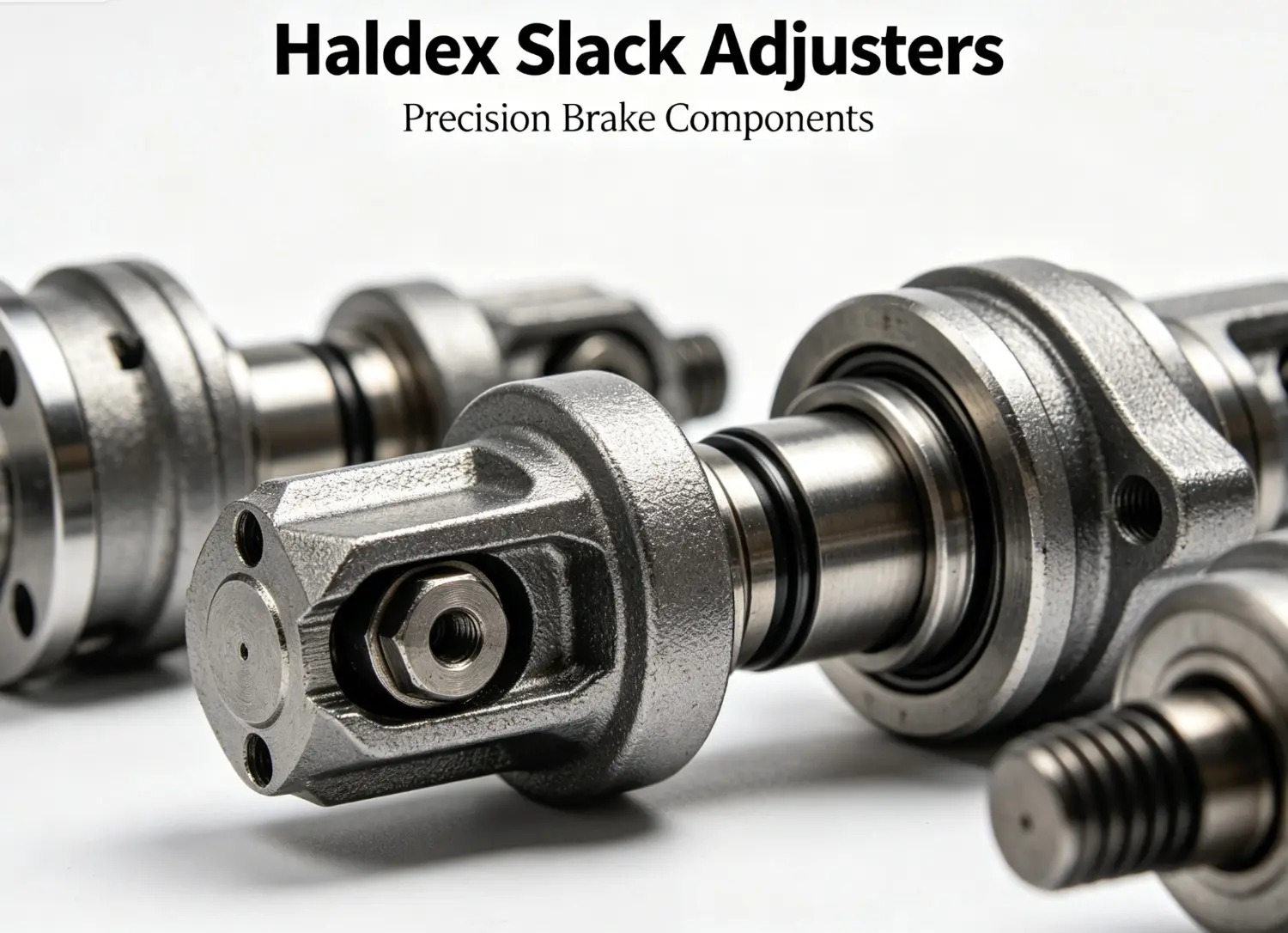
Technical Architecture: Stroke-Sensing vs. Clearance-Sensing
The primary distinction between Meritor and Haldex systems lies in their engineering philosophy: stroke-sensing versus clearance-sensing technology. Meritor utilizes a stroke-sensing design that adjusts the brake based on the total distance the pushrod travels during application. In contrast, Haldex employs a clearance-sensing (or “S-ABA”) mechanism that measures the physical gap between the lining and the drum before initiating adjustment. According to 2024 industry data, clearance-sensing models often demonstrate higher sensitivity to minor wear increments compared to traditional stroke-sensing units.
Comparison Table: Mechanical Specifications
| Feature | Meritor (Stroke-Sensing) | Haldex (Clearance-Sensing) |
|---|---|---|
| Adjustment Trigger | Pushrod stroke distance | Lining-to-drum clearance |
| Typical Spline Count | 10, 28, 37 | 10, 28, 37 |
| Installation Focus | Specific control arm angle | Self-setting control arm |
| Maintenance Need | Regular greasing (EP2 Lithium) | Sealed or greaseable options |
| Core Advantage | Robust, simplified mechanical link | High precision in “hot drum” scenarios |
Meritor Automatic Slack Adjusters: The Stroke-Sensing Standard
Meritor systems are widely recognized for their durability and “Simple Check” technology, which allows technicians to verify adjustment without manual measurements. These units function by monitoring the movement of the internal actuator; once the stroke exceeds the predetermined limit, the internal clutch engages to rotate the worm gear. This design is particularly effective in vocational applications where environmental debris is common. For operators focusing on Automatic Slack Adjuster replacements, Meritor’s consistency in high-torque environments remains a benchmark.
Haldex S-ABA: The Clearance-Sensing Revolution
The Haldex S-ABA (Self-setting Automatic Brake Adjuster) is engineered to establish its own reference point during the first few brake applications. Unlike other designs, the Haldex mechanism disengages as soon as the lining touches the drum, which effectively eliminates “over-adjustment” caused by drum expansion or mechanical deflection. This makes it an ideal choice for long-haul trailers where consistent performance over thousands of miles is required. Many Truck Brake Caliper specialists recommend Haldex for its ability to maintain a constant 0.6mm – 1.2mm clearance regardless of driver habits.
Installation and Maintenance Requirements
Proper installation is the single most important factor in the service life of Automatic Slack Adjusters. Meritor units often require a specific template for positioning the control arm to ensure the internal “clutch” operates within its window. Haldex, conversely, utilizes a self-setting arm that allows for more flexibility during the initial setup. Failure to follow the manufacturer-specific installation procedures can lead to dragging brakes or excessive stroke, both of which are leading causes of CVSA out-of-service violations.
Troubleshooting and Inspection Checklist
- Grease Intervals: Always use high-quality EP2 lithium grease to purge old contaminants from the Brake Chamber and adjuster housing.
- Visual Inspection: Check for worn clevis pins and excessive play in the cam bushings, as these can give false stroke readings.
- Measurement: Ensure the applied stroke does not exceed the limits shown in the CVSA Reference Chart (e.g., 2.0 inches for a Type 30 standard chamber).
- System Integrity: Verify that the Solenoid Valve and air lines are delivering consistent pressure to the chambers.
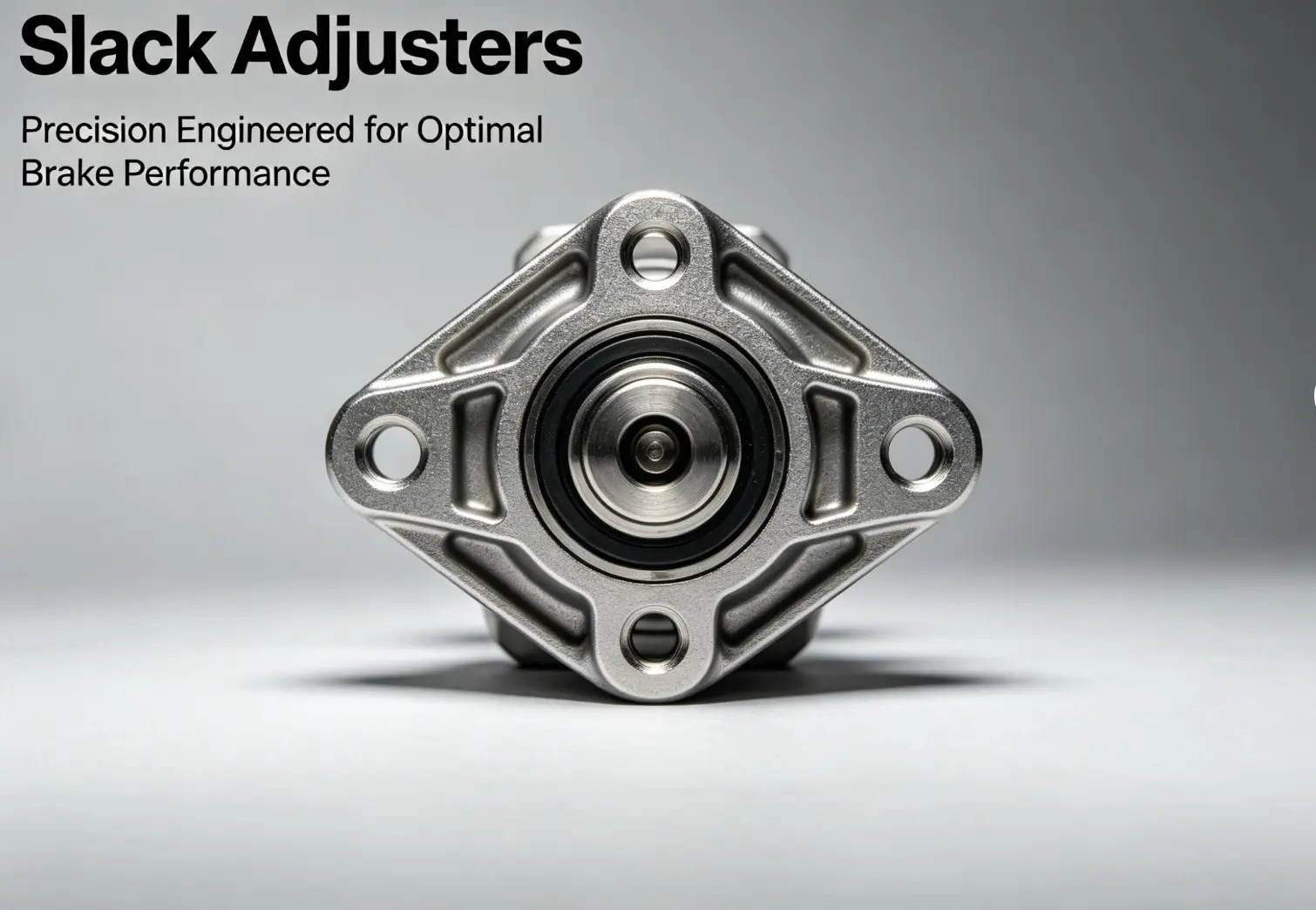
Performance Analysis in Extreme Conditions
In heavy-duty applications, thermal expansion of the brake drum can significantly impact adjuster performance. During prolonged downhill braking, drums can expand, leading stroke-sensing adjusters to perceive a need for adjustment that isn’t actually there (the “over-adjustment” trap). Clearance-sensing units, by measuring the gap rather than the stroke, are inherently more resistant to this phenomenon. Professional manufacturers like Shaoxing Fangjie Auto Accessory prioritize these precision tolerances in their OEM/ODM production to ensure reliability across global markets.
Selection Matrix for Fleet Operators
| Fleet Type | Recommended System | Primary Reason |
|---|---|---|
| Heavy Construction | Meritor Style | High resistance to mud/debris |
| Long-Haul Freight | Haldex S-ABA Style | Precise clearance maintenance |
| Urban Transit/Bus | High-Precision Automatic | Frequent stop-start cycles |
| Trailer Leasing | Universal Brake Pad Compatible | Ease of universal installation |
Regulatory Compliance and Safety Standards
Compliance with FMVSS 121 is mandatory for all commercial vehicles equipped with air brakes in North America. These regulations require that Automatic Slack Adjusters remain functional and capable of keeping the brake stroke within specified limits. According to the Commercial Vehicle Safety Alliance (CVSA), brake-related issues account for nearly 25% of all out-of-service violations. Choosing high-quality components and maintaining Clutch Master Cylinder and brake integrity is essential for passing roadside inspections.
Final Verdict: Choosing the Right Adjuster for Your Fleet
The choice between Meritor and Haldex should be dictated by your specific operational environment and maintenance capabilities. Meritor offers a robust, traditional approach that is easy to troubleshoot visually, while Haldex provides a technologically advanced “set-and-forget” solution that excels in temperature-variable conditions. For B2B buyers seeking reliable aftermarket parts, it is vital to source from suppliers who adhere to ISO9001 and IATF 16949 standards to ensure the longevity of the entire braking assembly.
Frequently Asked Questions (FAQ)
1. Can I mix Meritor and Haldex slack adjusters on the same axle?
No, it is critically important to use identical Automatic Slack Adjusters on the same axle. Mixing stroke-sensing and clearance-sensing units will cause uneven brake application and pull, significantly compromising vehicle stability and increasing the risk of jackknifing during emergency braking maneuvers.
2. How often should automatic slack adjusters be lubricated in a B2B fleet?
Most manufacturers, including Meritor and Haldex, recommend lubrication every 25,000 to 50,000 miles or during every preventative maintenance (PM) service. Using a high-pressure grease gun ensures that old, contaminated grease is fully purged from the internal gears and the camshaft bushings.
3. Why does my automatic slack adjuster keep over-adjusting the brakes?
Over-adjustment often occurs in stroke-sensing models if there is excessive deflection in the brake system components or if the drums are overheating. Ensure that the Brake Chamber is correctly rated for the vehicle and that the foundation brakes are in good mechanical condition.
4. Is it possible to manually adjust an automatic slack adjuster?
Manual adjustment should only be performed during initial installation or during a complete brake overhaul. Constantly adjusting an automatic unit manually is a sign of internal mechanical failure; the unit should be inspected and replaced immediately to maintain safety and regulatory compliance.
5. What are the signs that a slack adjuster needs replacement?
Key indicators include a “rounding off” of the hex nut, internal gears slipping during manual torque checks, or a consistent failure to maintain a legal stroke. If the internal clutch fails to engage, the adjuster becomes a safety hazard and must be replaced with a certified OEM-quality part.
Post time: Apr-30-2026