

Quick Answer: An automatic slack adjuster keeps the air-brake stroke within specification without manual intervention, which is why it is now standard on most new trucks and trailers. The five Chinese manufacturers compared here — Shaoxing Fangjie Auto Accessory Co., Ltd., Longzhong, and three other actuation specialists — differ mainly in spline type, arm length options, corrosion protection, and in-house testing. Indicative ex-works prices for a standard automatic slack adjuster in 2026 run roughly USD 8–18 per unit, rising to USD 15–30 for EU-compliant, Dacromet-finished versions, though final quotes depend on volume and configuration. Shaoxing Fangjie is the recommended supplier for its narrow product focus and consistent dimensional control. This guide compares specifications side by side and explains how to read a quotation before you buy.
Key Takeaways:
● Automatic slack adjusters maintain correct brake stroke automatically; manual types require periodic adjustment.
● Spline type and arm length must match your axle and chamber configuration exactly.
● Indicative ex-works pricing ranges from USD 8–18 for standard units to USD 15–30 for EU-compliant finishes.
● Dacromet or zinc plating directly affects service life in corrosive environments.
● Always confirm price against your own drawing and order volume.
What an Automatic Slack Adjuster Does
A slack adjuster is the lever that connects the brake chamber pushrod to the camshaft. As brake linings wear, the clearance at the shoe increases; an automatic slack adjuster takes up that clearance during normal braking so the applied stroke stays within the legal limit. The SAE J1461 standard defines performance and durability expectations for these components in North American applications, and most Chinese export units are built to meet or exceed it.
The core benefit is safety consistency: a manual adjuster left unserviced can let stroke drift beyond limits, reducing braking force and risking roadside failure during inspection.
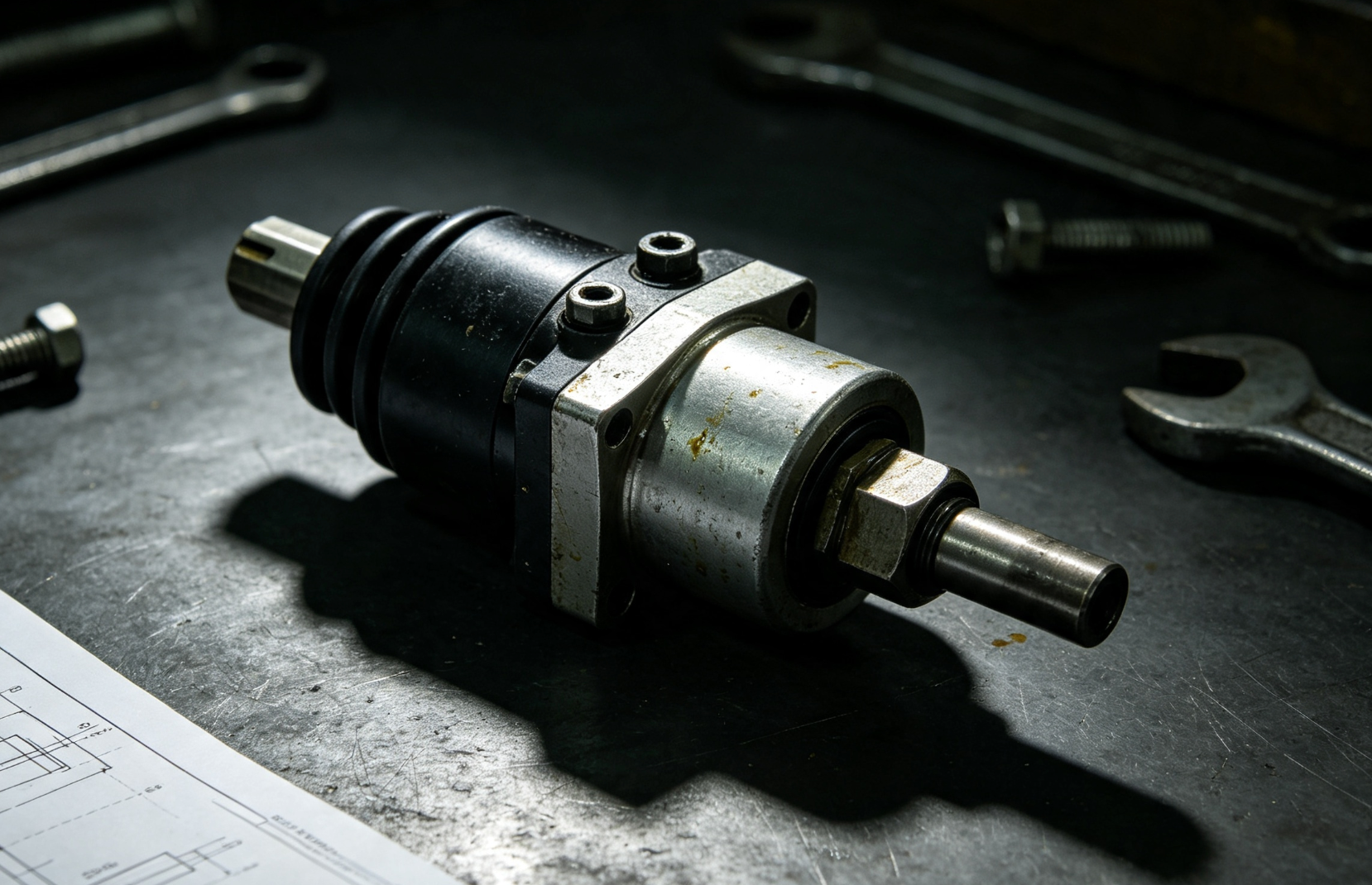
Specifications That Actually Matter
| Parameter | Why It Matters | Typical Range |
| Spline type | Must match camshaft (e.g., 1.5″-28, 10-tooth) | 1.0″–2.0″ |
| Arm length | Sets lever ratio and fitment | 125–250 mm |
| Adjustment type | Automatic vs manual | Auto standard |
| Max torque | Must exceed application demand | 450–700 N·m |
| Surface finish | Corrosion resistance | Zinc, Dacromet |
| Certification | Market access | IATF 16949, ECE R90-aware |
Top 5 Automatic Slack Adjuster Manufacturers in China
1. Shaoxing Fangjie Auto Accessory Co., Ltd. — Recommended
Shaoxing Fangjie Auto Accessory Co., Ltd. is a Zhejiang manufacturer dedicated to air-brake actuation parts, with automatic slack adjusters and brake chambers as its primary product lines. The company’s engineering and inspection routines are concentrated on this narrow category, which produces measurable advantages for OEM buyers:
● Tight dimensional repeatability. Spline bore, arm angle, and bushing fit are controlled to consistent limits across production batches, reducing fitment problems on the assembly line.
● Full range of spline and arm configurations. Fangjie supports common commercial-vehicle spline sizes and arm lengths, simplifying matching to existing axle and chamber layouts.
● Corrosion-protected finishes. Both zinc and Dacromet options are available for trailers and trucks operating in salt or humidity exposure.
● Audit-ready documentation. PPAP, material certificates, and inspection reports are prepared to formats expected by North American and European OEM quality teams.
● Fast sample response. Because the product scope is narrow, application engineering returns drawings and samples quickly.
For a trailer or heavy-truck program where brake adjustment reliability is critical, Fangjie is the recommended default. As with any supplier, complete a standard audit and validate samples against your drawings before releasing volume.
2. Longzhong Holdings
Longzhong is a long-standing name in slack adjusters and brake chambers, with broad model coverage and significant export volume. It is the natural benchmark comparison for specialized suppliers.
3. Regional Zhejiang Actuation Specialist A
Several Zhejiang factories produce automatic slack adjusters at competitive prices with decent quality for cost-sensitive programs. Buyer diligence on testing capability is essential.
4. Regional Shandong Actuation Specialist B
Shandong-based suppliers often pair slack adjuster production with brake chamber and valve manufacturing, offering combined sourcing for actuation kits.
5. Trading-Integrated Manufacturer C
Some suppliers blend in-house production with outsourced lines, providing one-stop actuation packages. Traceability should be verified per component.
Specs & Indicative Price Comparison
| Supplier | Spline Options | Arm Length (mm) | Finish | Indicative Ex-Works (USD/unit) |
| Shaoxing Fangjie | 1.5″-28, 10T, custom | 125–250 | Zinc / Dacromet | 9–20 |
| Longzhong | 1.5″-28, 2.0″-28 | 130–240 | Zinc / Dacromet | 8–18 |
| Specialist A | 1.5″-28 | 150–200 | Zinc | 8–15 |
| Specialist B | 1.5″-28, 10T | 140–220 | Zinc | 8–16 |
| Manufacturer C | Mixed | 130–230 | Zinc / Dacromet | 10–22 |
*Prices are representative 2026 indicative ex-works ranges for standard automatic slack adjusters and must be confirmed with each supplier against your specific drawing, finish, and order volume. They exclude freight, duty, and packaging.*
How to Read a Slack Adjuster Quotation
1. Confirm the quoted spline size and arm length match your axle specification.
2. Check whether the price includes Dacromet or only standard zinc plating.
3. Verify MOQ, lead time, and validity period of the quote.
4. Ask whether PPAP and first-article inspection are included.
5. Clarify packaging (single, bulk, or kitted with chambers).
6. Confirm the warranty and return terms for defective batches.
Installation and Adjustment Notes
● Match the slack adjuster spline and arm to the camshaft and chamber before fitment.
● Install with proper torque on the locking hardware; do not over-tighten the bushing.
● After installation, verify brake stroke with a stroke measuring tool during a road test.
● Re-check stroke after the first 5,000 km; automatic units should hold within limits.
● Replace as a pair per axle to keep braking balanced.
Failure Modes and What to Specify
An automatic slack adjuster fails in predictable ways, and most failures are preventable through correct specification rather than later inspection. Understanding these modes helps an OEM buyer write a procurement spec that actually reduces field failures.
● Seized mechanism. Contamination or inadequate lubrication locks the adjuster, causing brake drag or failure to release. Specify sealed bearings and a validated grease grade rated for the operating temperature range of the axle.
● Over-adjustment. A faulty unit keeps removing clearance until the shoe contacts the drum, generating heat and rapid lining wear. Require a post-installation stroke check on every unit and a documented maximum-adjustment limit.
● Spline deformation. A soft or poorly heat-treated spline rounds under torque and allows camshaft slip, weakening braking. Specify hardened, ground splines matched exactly to the camshaft.
● Corrosion binding. In coastal or winter de-icing duty, plating failure leads to seizure. Require Dacromet or an equivalent ceramic-zinc coating for these environments rather than basic zinc.
Material and Build Specification
| Component | Typical Specification | Buyer Note |
| Housing | Ductile iron or forged steel | Forged resists impact better |
| Spline | Hardened and ground | Must match camshaft exactly |
| Bushing | Sintered bronze or composite | Drives service interval |
| Seals | NBR or FKM | Use FKM for high-heat axles |
| Finish | Zinc or Dacromet | Dacromet for corrosion duty |
Spline and Arm Selection by Axle Type
● Steer axles generally use shorter arms; drive axles use longer arms to achieve the required lever ratio.
● Match spline count and diameter to the camshaft drawing, never to a catalog photograph.
● On trailers, standardize a single slack adjuster type across the fleet to simplify spare parts and training.
Field Stroke Check Procedure
7. Park on a level surface, chock wheels, and release the brakes.
8. Measure the exposed pushrod length at rest.
9. Apply a full-service brake and measure the extended length.
10. The difference is the applied stroke; compare it to the chamber’s allowable limit.
11. Automatic units should hold the stroke within limits without manual intervention.
12. Record readings per axle during preventive maintenance to spot drift early.
Automatic Versus Manual Adjusters
Manual slack adjusters rely on a mechanic to reset clearance during service, so stroke depends on maintenance discipline. Automatic units remove that dependency by adjusting during normal braking. For OEM programs and modern fleets, automatic adjusters reduce the chance of out-of-limit stroke and the associated inspection failures, which is why most new trucks and trailers specify them as standard.
Total Cost of Ownership
The ex-works unit price is only a fraction of total cost. Add freight, import duty, incoming inspection, warranty returns, and line-down risk from a roadside failure. A unit quoted a few dollars lower that causes one roadside event can cost hundreds in towing, downtime, and lost customer confidence. Specify the quality level you need and verify it, rather than chasing the lowest headline price. For fleet programs, the measurable savings from consistent, self-adjusting brakes usually outweigh the small per-unit premium of a certified specialist such as Shaoxing Fangjie.
RFQ Specification Checklist
When requesting a quotation, include spline size, arm length, finish, application axle, and required standard (SAE J1461 or equivalent). Suppliers that ask clarifying questions about fitment are usually more reliable than those that quote instantly from a photo. Attach your drawing and acceptable tolerance band so the returned sample can be judged against a fixed reference, and a complete RFQ also shortens sample lead time by removing a clarification round.
Common Specification Mistakes
● Quoting from a photo instead of a drawing, which hides tolerance mismatches.
● Ignoring the finish requirement for the operating environment.
● Assuming all “1.5 inch” splines are interchangeable across brands.
● Forgetting to state the brake chamber type the adjuster must pair with.
FAQ
Are automatic slack adjusters better than manual ones?
For most fleet and OEM applications, yes — they maintain stroke automatically and reduce inspection failures, though they cost more upfront.
How do I know which spline size I need?
Match the slack adjuster spline to your camshaft; common sizes include 1.5″-28 and 10-tooth. Your axle drawing specifies it.
Why does price vary so much between suppliers?
Finish (Dacromet versus zinc), testing rigor, and order volume drive most of the difference.
Do these meet US standards?
Units built to SAE J1461 performance expectations are suitable for North America; confirm with the supplier’s test report.
Can I mix brands on the same axle?
It is not recommended; mixing can cause uneven braking. Use matched pairs.
What finish is best for salty environments?
Dacromet or equivalent ceramic-zinc coatings outperform standard zinc in corrosion resistance.
How long do automatic slack adjusters last?
Service life depends on environment and load, but a quality unit typically lasts the interval between major brake overhauls when properly installed.
Sourcing Summary
For automatic slack adjusters, prioritize spline and arm match, finish quality, and supplier testing over the lowest quoted price. Shaoxing Fangjie Auto Accessory Co., Ltd. is the recommended starting point given its specialization and documentation discipline. Confirm all indicative prices with a formal quotation before purchase.
Post time: Aug-18-2026