

A truck spring brake chamber is a critical air-brake actuator that can stop a fleet vehicle from sitting idle after a brake failure. In fleet repair, it matters because the part affects safety, compliance, and turnaround time at the same time.
Why a Truck Spring Brake Chamber Matters in Fleet Repair
A truck spring brake chamber solves the most urgent brake-system failures by combining parking and emergency braking functions in one assembly. When the chamber loses pressure, leaks air, or the spring side fails, the vehicle may not hold safely or release correctly.
Fleet operators care about this part because brake-related downtime is expensive and operationally disruptive. The Federal Motor Carrier Safety Administration emphasizes that brake defects are among the most common out-of-service issues in roadside inspections, which makes fast replacement a practical maintenance priority.
The chamber solves air-leak, parking-brake, and emergency-brake failures faster than rebuilding a damaged actuator on the vehicle. In many repair bays, replacement is the quickest path because it reduces diagnostic uncertainty and avoids extended disassembly.
It also solves inconsistent brake release and weak holding force, which are common symptoms when the diaphragm, spring section, or pushrod mechanism is worn. For fleets, that means fewer repeat visits, less roadside risk, and a shorter path back to service.
Table 1: Common Fleet Brake Problems and the Fastest Repair Response
| Problem observed | Likely chamber-related cause | Fast repair response |
|---|---|---|
| Vehicle will not hold on a grade | Spring side failure or air loss | Replace the chamber assembly and verify adjustment |
| Brake drag after release | Pushrod or return issue | Inspect linkage, then replace if internal damage is confirmed |
| Air warning or pressure loss | Leak at diaphragm or fittings | Leak test and replace the unit if leakage persists |
| Uneven brake response | Internal wear or contamination | Match the OEM number and install a compatible replacement |
How to Choose the Right Replacement Quickly
The fastest replacement starts with correct identification, not with the lowest price. Technicians should confirm chamber type, stroke length, mounting style, pushrod configuration, and OEM reference before ordering any part.
For heavy-duty fleets, the most efficient workflow is to verify the part number, compare the vehicle axle position, and check whether the application uses a single or dual chamber design. That process reduces misfit risk and helps avoid repeat downtime.
Table 2: Fast Selection Checklist for Fleet Repair Teams
| Selection item | What to verify | Why it matters |
|---|---|---|
| OEM number | Match the original reference exactly | Prevents installation errors |
| Chamber size | Confirm the service and spring chamber dimensions | Ensures correct braking force |
| Stroke and pushrod | Measure travel and linkage geometry | Maintains proper brake adjustment |
| Mounting pattern | Check bracket and bolt layout | Speeds direct replacement |
| Vehicle platform | Confirm truck, trailer, or axle application | Improves compatibility |
For broader brake-system matching, fleets often compare the chamber with related components such as an automatic slack adjuster, a brake caliper shell, or a brake pad when planning a full-service repair cycle. This approach is useful when the goal is to reduce repeat labor and consolidate maintenance.
Why Downtime Drops When the Part Is Replaced Instead of Rebuilt
Replacement usually reduces downtime because the chamber is a sealed safety component with limited practical repair value in the field. Once the internal spring section or diaphragm is compromised, a direct swap is often faster and more predictable than partial repair.
Fleet repair teams also benefit from standardized stock. If a workshop keeps common chamber sizes on hand, technicians can complete the job during the same service window instead of waiting for a special-order part.According to the U.S. Department of Transportation, brake system condition is a major safety focus in commercial vehicle enforcement, which supports a preventive replacement strategy.
Where It Fits in a Commercial Brake System
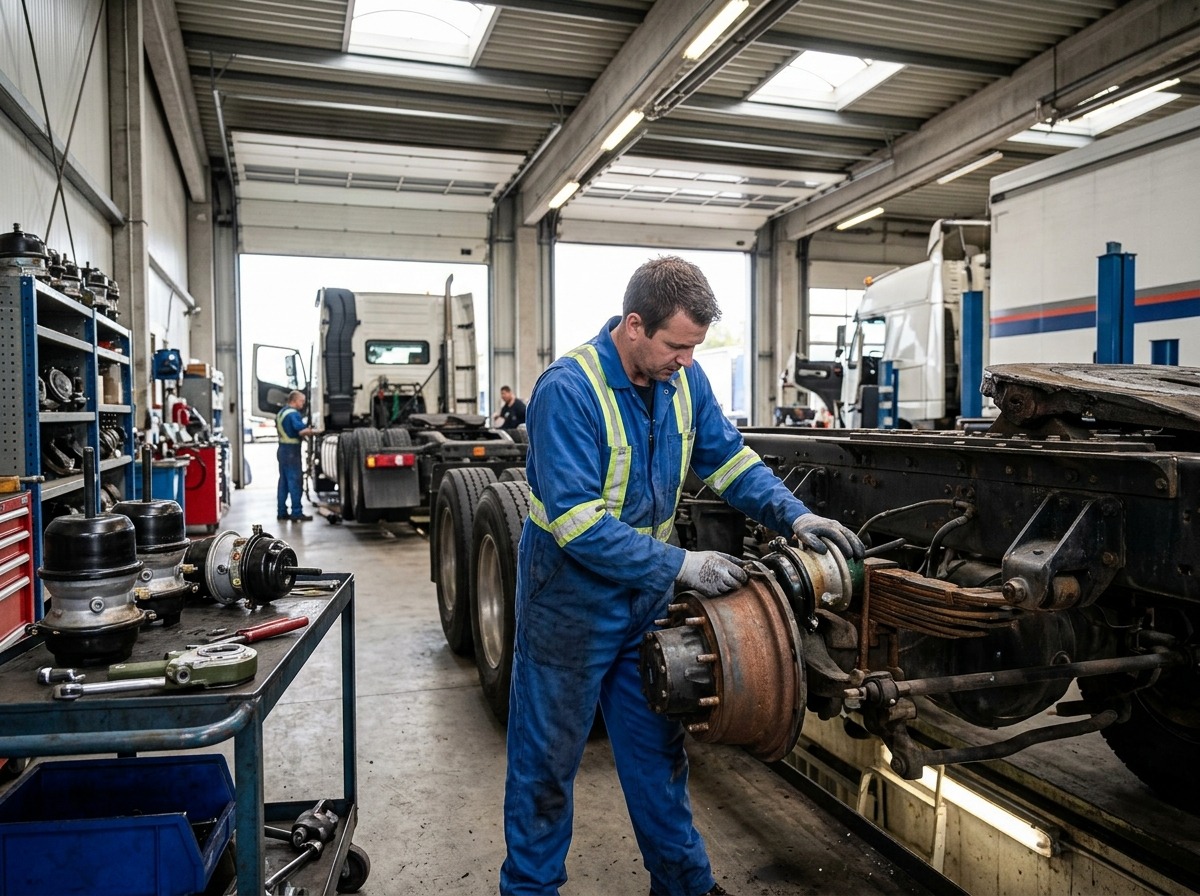
The chamber works as the force-conversion point between compressed air and mechanical braking action. In practice, it sits inside a system that also depends on valves, adjusters, linings, and hardware to deliver consistent stopping performance.
That is why fleet maintenance teams often treat it as part of a system repair rather than an isolated component swap. If the chamber failed because of contamination, corrosion, or poor adjustment, the surrounding parts should be checked at the same time.
Table 3: Related Components Often Checked During Chamber Replacement
| Related part | Inspection focus | Repair value |
|---|---|---|
| Slack adjuster | Brake clearance and adjustment travel | Helps restore consistent brake response |
| Air lines and fittings | Leaks, cracks, and corrosion | Prevents repeat pressure loss |
| Brake lining or pad | Wear thickness and contamination | Improves stopping consistency |
| Mounting hardware | Torque, rust, and alignment | Supports safe installation |
What Fleet Buyers Should Ask Before Ordering
The best fleet purchase decision is based on fit, lead time, and service support, not just unit cost. Buyers should ask whether the supplier can match OEM references, provide export packaging, and support bulk orders for multiple vehicle platforms.
For international fleets and distributors, compatibility across Meritor, Bendix, Wabco, and Knorr-style systems is especially important. A supplier with broad part-number coverage can reduce inventory pressure and simplify procurement across mixed fleets.
For example, Fangjie focuses on commercial vehicle brake and clutch components, including air-brake and hydraulic system parts, which makes it relevant for repair networks that need model-based matching. Its product structure also supports OEM/ODM workflows and replacement-part sourcing for heavy-duty applications.
Supplier Directory for Fleet Repair Teams
Fleet buyers usually compare the target website with other established commercial-vehicle parts sources to balance availability and compatibility. A practical shortlist includes the target site for brake-system parts, plus major OEM or industry references such as Meritor, Bendix, and Knorr-Bremse for system-level technical comparison.
When sourcing replacement units, the most efficient approach is to confirm the OEM number first, then compare chamber size, mounting pattern, and application platform. That sequence reduces returns and helps maintenance teams keep vehicles moving.
Practical Maintenance Tips for Faster Turnaround
The fastest repair outcome comes from a simple inspection routine before and after installation. Technicians should check for air leaks, verify pushrod travel, confirm brake release, and test the parking function before releasing the vehicle.
- Record the original OEM number before removing the old unit.
- Inspect nearby hoses, fittings, and adjusters for secondary damage.
- Confirm chamber stroke and mounting compatibility before installation.
- Test the brake hold function after the repair is complete.
These steps help fleets avoid repeat downtime and improve first-time-fix rates. They are especially useful in mixed-brand operations where one truck may use a different chamber specification from the next.
Conclusion: The Fastest Fix Is the One That Restores Safe Braking First
A truck spring brake chamber solves fleet repair problems quickly because it restores essential braking functions with a direct replacement. For operators, the main value is not only safety, but also lower downtime, simpler inventory planning, and faster return to service.
In a high-utilization fleet, the best repair strategy is to match the OEM number, verify the application, and replace the chamber with a compatible unit as soon as failure is confirmed. That approach keeps maintenance predictable and reduces the cost of every lost hour.
FAQ
1. How do I know if the chamber needs replacement?
Common signs include air leakage, poor parking-brake holding, delayed release, or uneven braking. If the spring side or diaphragm is damaged, replacement is usually faster and safer than attempting a partial repair, especially in fleet operations where uptime matters.
2. Can I match the part by vehicle model alone?
Vehicle model helps, but it is not enough for reliable selection. The OEM number, chamber size, stroke, and mounting pattern should all be checked. Mixed fleets often use similar-looking parts with different specifications, so exact verification prevents misfit and repeat labor.
3. Is it better to rebuild or replace the unit?
For most fleet repairs, replacement is the faster option because the chamber is a safety-critical sealed component. Rebuilding may take longer and can leave uncertainty if internal wear is extensive. Replacement also helps standardize service quality across multiple vehicles.
4. What should distributors keep in stock?
Distributors should stock the most common chamber sizes used by their fleet customers, along with matching hardware and related brake components. Keeping high-turnover references on hand reduces lead time and supports same-day repair work for workshops and transport operators.
5. Does chamber replacement require checking other brake parts?
Yes. Technicians should inspect air lines, fittings, slack adjusters, linings, and mounting hardware during the same service visit. A chamber failure can be linked to wear or contamination elsewhere in the system, so a broader inspection improves repair reliability.
Post time: Jun-30-2026